
One-Third of UC's Graduating Medical Students Staying in Cincinnati

The region will get another health-care boost this weekend when the University of Cincinnati (UC)
Of the 150 graduating medical students, nearly one-third will stay in
Medical school graduation is quite an achievement and we are proud of all our students for their accomplishments, said David Stern, MD,
The graduation ceremonycalled Honors Daywill begin at 1 p.m., Sunday, May 28, at the
Opening remarks by Dr. Stern and Jane Henney, MD, UCs senior vice president and provost for health affairs, will be followed by recognition of the recipients of the College of Medicines highest honorthe Daniel Drake Medals. Numerous other awards for humanism in medicine and teaching excellence will also be presented.
Receiving the 2006 Leonard Tow Humanism in Medicine Awards presented by the Arnold P. Gold Foundation are Bruce Gebhardt, MD, associate professor, department of family medicine, and Matthew Meier, a fourth-year medical student from
Gold and Silver Apple teaching awards will go to Richard Stevenson, MD, associate professor, department of surgery, and LeAnn Coberly, MD, associate professor, department of internal medicine.
Facts about Residency Training
Residency is a specialized education and training period following graduation from medical school. Upon completion of a residency program, physicians can take board examinations and practice independently.
Residency training ranges from three years for programs like internal medicine, family medicine and pediatrics, to four years for obstetrics and gynecology, and five years for general surgery and many surgical subspecialties. Neurosurgery residency can take seven years to complete.

Upon completion of a residency program, physicians can take board examinations and practice independently.
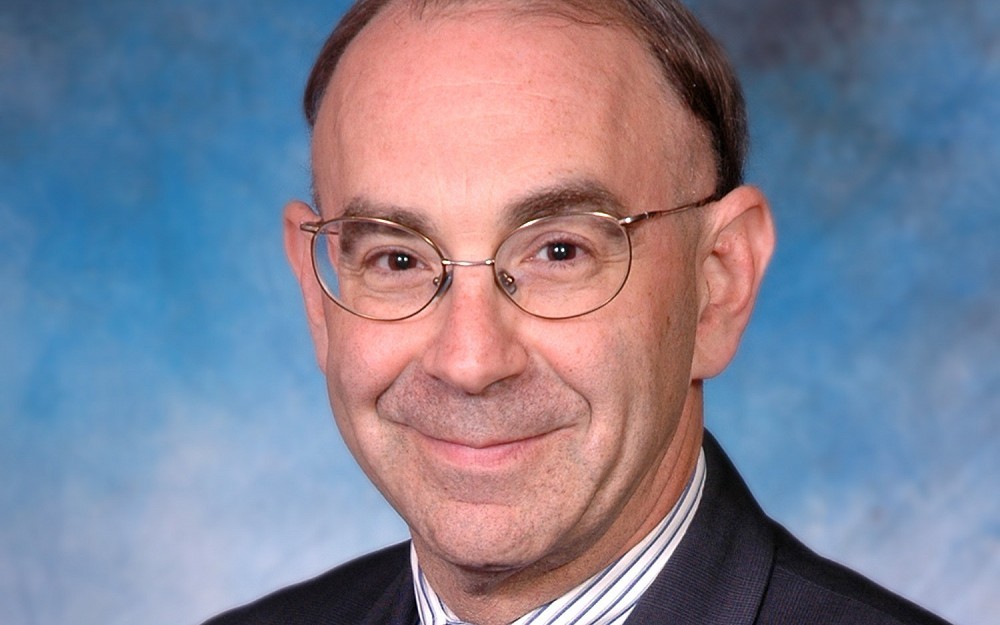
College of Medicine Dean and Vice President for Health Affairs David Stern, MD
Related Stories
Cancer Center plays key role in lab research, clinical trials for new pancreatic cancer drug
September 1, 2026

WLWT and WCPO highlighted the contributions of University of Cincinnati Cancer Center researchers that helped lead to the recent FDA approval of daraxonrasib, a new treatment for pancreatic cancer.
Cancer Center physician receives $150,000 New Investigator Research Grant to study treatment-resistant leukemia
September 1, 2026
The University of Cincinnati Cancer Center’s Sarah Skuli, MD, PhD, received a two‑year, $150,000 Leukemia Research Foundation New Investigator Grant to study TP53‑mutated leukemia, a treatment‑resistant subtype with very poor outcomes.
Heavy social media use linked to depression
August 31, 2026

U.S. News and World Report, Yahoo! News, MSN, USA Today and other national media highlight a new study by the University of Cincinnati and Northwestern University that found a correlation between heavy social media use and depression in adults.