Sunflower Revolution Funds Parkinson's Projects

CINCINNATIScientists at the James J. and Joan A. Gardner Family Center for Parkinsons Disease and Movement Disorders at the University of Cincinnati Neuroscience Institute have received grants totaling $153,000 for research into Parkinsons disease.
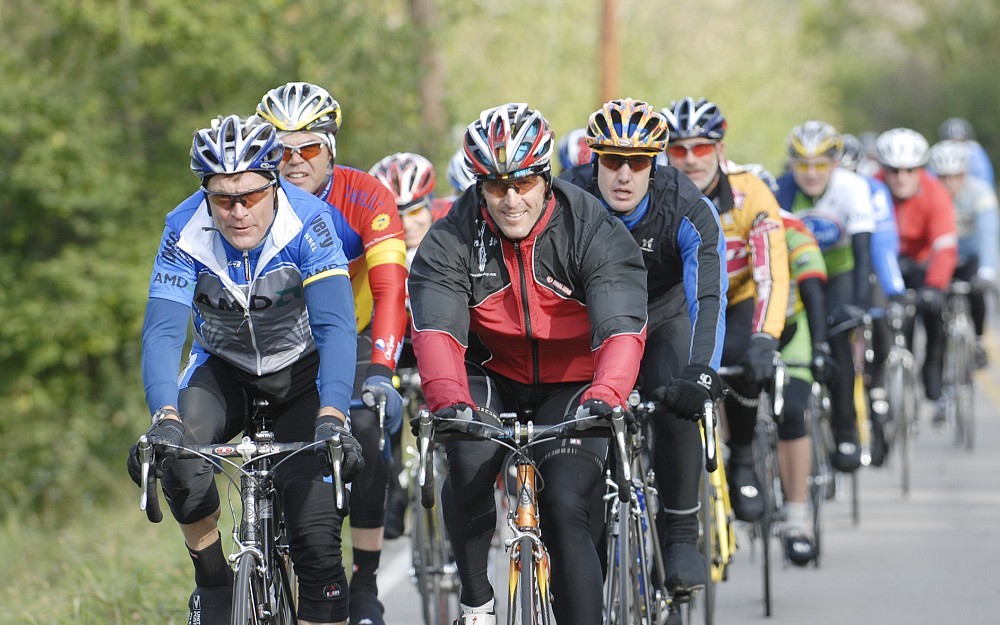
The funding was provided by the University Hospital Foundation, which co-hosts the annual Sunflower Revolution gala and bike ride with the Colorado-based Davis Phinney Foundation.
Kim Seroogy, PhD, a professor of neurology and director of the Selma Schottenstein Harris Laboratory for Research in Parkinsons, received $53,000 to study the effects of exercise therapy on stress-induced depression in animal models of Parkinsons disease.
Seroogy has previously shown that experimental depression exacerbates Parkinsons symptoms in an animal model of the debilitating movement disorder. Depression is highly correlated with Parkinsons disease, and exercise is known to produce antidepressant responses in individuals who have depression.
Seroogys team will attempt to determine the effect of repetitive exercise on coexisting Parkinsons disease, stress and depression, with the hope that the research will lead to non-pharmocological therapies that will alleviate both mood and motor symptoms of Parkinsons.
Tim Collier, PhD, a professor of neurology, received $50,000 to investigate the ability of antidepressants to protect dopamine neurons that are lost in the disease in an animal model of Parkinsons. Although many studies have evaluated the safety and effectiveness of antidepressants in the Parkinsons disease population, no one has directly investigated whether antidepressants impact the continuing progression of the disease.
About 40-50 percent of Parkinsons patients are diagnosed with depression and take antidepressants daily. Therefore, it is important to determine whether antidepressants have any effects on the cells that are normally lost in Parkinsons disease in addition to their ability to relieve the symptoms of depression.
Collier hopes that a better understanding of the impact antidepressants have on the degenerating dopamine system will help clinicians provide better treatment to patients with both depression and Parkinsons disease.
Caryl Sortwell, PhD, associate professor of neurology, received $50,000 to study the mechanism that may underlie some of the therapeutic benefits of deep brain stimulation in patients with Parkinsons disease. More than 20,000 patients had received deep brain stimulationelectrical stimulation of the subthalamic nucleus via implanted electrodesas of 2006.
Sortwell and her co-investigators will use an existing rodent model of Parkinsons to study the effects of acute and chronic deep brain stimulation on the neurotransmitter glutamate. In a previous study funded by the Davis Phinney Foundation and the University Hospital Foundation, Sortwell found that the act of stimulating neurons with electrodes boosted the amount of a nurturing, growth-promoting protein in the rats brains.
In her new study, Sortwell will incorporate state-of-the-art technology to detect low levels of glutamate in the substantia nigra, an area of the brain that receives inervation from the subthalamic nucleus and that contains dopamine neurons. Sortwell also will use the study to document the extent to which deep brain stimulation protects healthy dopamine neurons in the rodents brains.
The UC Neuroscience Institute, a regional center of excellence at UC and University Hospital, is dedicated to patient care, research, education, and the development of new treatments for stroke, brain and spinal tumors, epilepsy, traumatic brain and spinal injury, multiple sclerosis, Parkinsons disease, Alzheimers disease, disorders of the nerves and muscles, disorders of the senses (swallowing, voice, hearing, pain, taste, and smell) and psychiatric conditions (bipolar disorder, schizophrenia and depression).
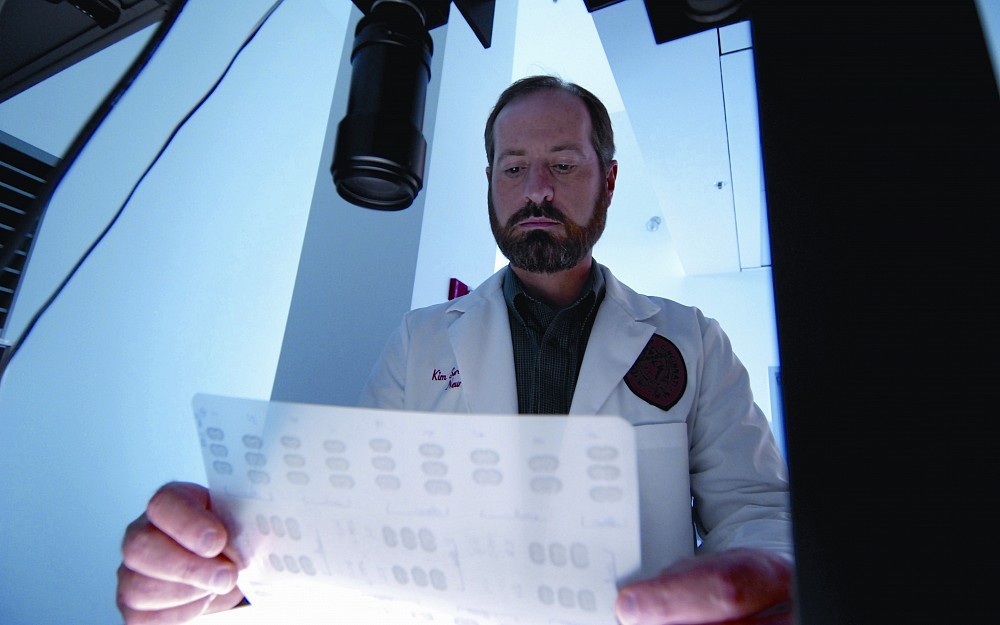
Kim Seroogy, PhD, is studying the relationship between Parkinson's disease and depression.

Michael Behbehani, PhD, and Caryl Sortwell, PhD
Tags
Related Stories
UC radiation oncologist speaks with Local 12 news about clinical trial for head and neck cancer treatment
August 10, 2026

Dr. Sara Medek, a UC radiation oncology professor, speaks with Local 12 news about a new clinical trial aimed at reducing radiation in certain areas while still treating cancer effectively but with fewer painful side effects.
Cancer Center director charts future based on collaboration, AI
August 10, 2026

David Gius, MD, PhD, was featured in a Cincinnati Business Courier article and The Cancer Letter’s “The Directors" podcast discussing his priorities and goals as he recently took the helm as director of the University of Cincinnati Cancer Center.
Bidirectional link between oral, kidney health calls for patient education, access
August 4, 2026

Despite growing awareness of the connection between oral health and chronic health conditions, patient awareness and access to dental care remain limited, according to University of Cincinnati experts who recently spoke with Healio | Nephrology News & Issues.