Protein Linked to Fat Cell Development

CINCINNATIRemoval of the protein S6K1 slows the formation of new adipocytes (fat cells). Researchers say the finding suggests that S6K1 could be directly targeted for treating or preventing obesity.
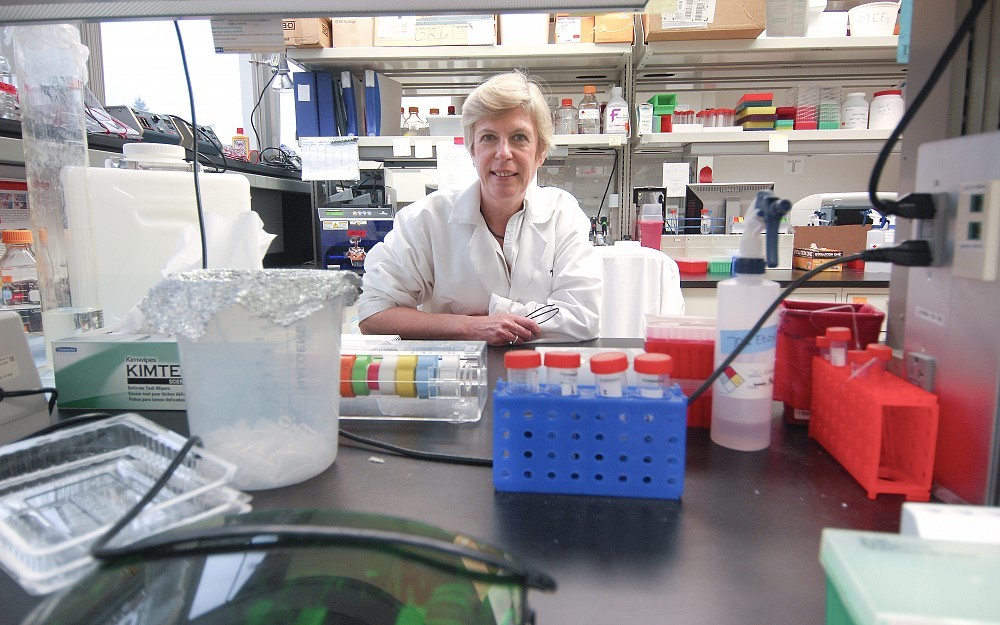
The results of this study, led University of Cincinnati (UC) cancer and cell biologist and associate professor Sara Kozma, PhD, are published in the May 18, 2010, edition of Developmental Cell.
In the study, Kozma and her team compared the effects of normal diets versus high-fat diets in mice with and without S6K1. Mice with S6K1 who ate a high-fat diet developed four times more fat cells than mice without S6K1 that were fed the same diet.
Using mouse embryonic stem cells, Kozma and her team were able to demonstrate that the effect of loosing S6K1 was exerted during the first step of fat cell developmenttermed the "commitment stageand that reintroducing S6K1 into these cells rescued fat cell development. Thus, lack of S6K1 slows fat cell production/renewal.
"We already know that S6K1 plays an important role in longevity, potentially through inhibition of adipose accumulation that has recently been associated with lifespan shortening in humans. These results support such a concept and we are now studying how S6K1 can be targeted to fight obesity, says Kozma. "We need to know more about the timing and means for targeting S6K1, to determine whether it could be an effective treatment.
The Centers for Disease Control and Prevention (CDC) estimates that 60 percent of adults over age 20 are either overweight or obese. Obesity is defined as having a body mass index of greater than 30.
Study co-authors include Larissa Carnevalli, Kouhei Masuda, Francesca Frigerio, Olivier Le Bacquer, Sung Hee Um, Valentina Gandin, Ivan Topisirovic, Nahum Sonenberg and George Thomas.
The research was funded by a fellowship from Procter & Gamble Pharmaceuticals and grants from the National Institutes of Health and the Canadian Institutes of Health Research.
UCs Metabolic Diseases Institute, named in 2009, is located on UCs Reading Campus, formerly the Genome Research Institute, and is home to a team of researchers who focus on the genetic, molecular and cellular mechanisms of metabolic disorders, cancer and cardiovascular disease.
Kozma is a member of the Cincinnati Cancer Consortium, a joint cancer program involving the UC College of Medicine, Cincinnati Childrens Hospital Medical Center and UC Health University Hospital. The collaborative initiative brings together interdisciplinary research teams of caring scientists and health professionals to research and develop new cures, while providing a continuum of care for children, adults and families with cancer.
Related Stories
UC radiation oncologist speaks with Local 12 news about clinical trial for head and neck cancer treatment
August 10, 2026

Dr. Sara Medek, a UC radiation oncology professor, speaks with Local 12 news about a new clinical trial aimed at reducing radiation in certain areas while still treating cancer effectively but with fewer painful side effects.
Cancer Center director charts future based on collaboration, AI
August 10, 2026

David Gius, MD, PhD, was featured in a Cincinnati Business Courier article and The Cancer Letter’s “The Directors" podcast discussing his priorities and goals as he recently took the helm as director of the University of Cincinnati Cancer Center.
UC graduates cross finish line at commencement
August 7, 2026
The University of Cincinnati recognized 2,125 graduates in two ceremonies at summer commencement Friday on campus at Fifth Third Arena.