Interdisciplinary Heart Team Treats Rare Condition Using One-of-a-Kind Procedure

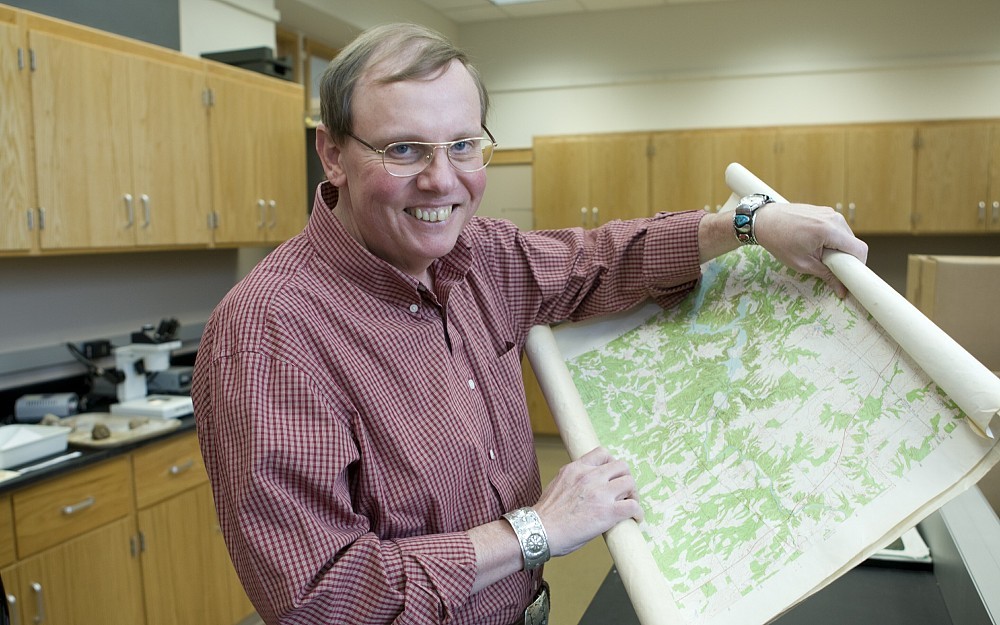
In 2007, Ken Tankersley, PhD, a UC anthropologist, then 52, was saying, "I feel like Im in my 20s, after receiving treatment for atrial fibrillationan irregular, fast and abnormal heart rhythmand heart failure from Neal Weintraub, MD, UC Health cardiologist.
Unfortunately, those healthy feelings dwindled as Tankersley began to notice the return of irregular heartbeats.
Tankersley, who is known nationally for his research with climate change and has made documentaries for not only the Discovery Channel but also the History Channel, National Geographic and PBS, among others, says his work and his active life started to suffer yet again.
Weintraub, along with Alexandru Costea, MD, a UC Health electrophysiologist who also helped Tankersley manage atrial fibrillation, decided that an ablation to correct cardiac electrical abnormalities responsible for the abnormal rhythm should be performed.
"In September, they did a pre-surgical CT scan which, to everyones surprise, revealed a very rare, torturous fistula between my right coronary artery and my superior vena cava, Tankersley says.
This fistula, a congenital defect essentially connecting an artery and vein, was pressing on the left atrium of the heart causing the right atrium and ventricle to become enlarged because of the increased blood flow through the fistula.
"It deformed my left atrium and was suspected to contribute to my atrial fibrillation and possibly my heart failure, says Tankersley. "Dr. Weintraub believed that treatment of this congenital heart disease would be challenging because of chest radiation that I was exposed to during cancer treatment for testicular cancer and lymphoma in 1985.
Weintraub assembled a group of UC Health cardiac, surgical, radiological and even neurological experts to discover the best course of action for Tankersley.
"Our team worked for five hours to close the fistula using a procedure known as a coil embolization, says Massoud Leesar, MD, a UC Health interventional cardiologist. "This was a team approach which also involved Dr. Ross Ristagno from interventional radiology and Dr. Todd Abruzzo from neuroradiology.
Sangita Kapur, MD, a UC Health cardiopulmonary radiologist, was also involved and helped find the location and size of the fistula.
"The team advanced a catheter through the path of the fistula between the right coronary artery and the superior vena cava to close the fistula permanently by advancing specialized coils into the fistula, Leesar adds. "It was a landmark procedure. Cases like this typically require surgery, but we did this with catheters and devices in the catheterization lab.
Tankersley says he was conscious throughout almost the entire procedure and was able to listen and watch doctors in action.
"It was amazing to see innovation happening right before my eyes, he says. "As far as I know, what they did was unprecedented and literally cutting-edge. They were literally inventing as they went, but I knew I was in the very best of hands.
Tankersley says that immediately following the procedure, he was sent to the Cardiac Intensive Care Unit at UC Health University Hospital where he experienced instantaneous relief.
"I felt immensely better, so much so that I started to unplug machines and tell the staff that I was ready to go home, he says. "I felt as if I could run five miles, and I honestly felt guilty that I was taking up bed space in an ICU.
The procedure was done on Tuesday, Nov. 15. Tankersley was back home by Friday, Nov. 18, and back to work at UC by Nov. 21.
"I have a framed photo of my rare fistula on my deskstudents often ask if it is an interesting terrain or landscapeI tell them that it is my heart, he says with a laugh. "On Monday, I added a new photo to the mix: my fixed heart.
"This was not a cookbook cure, if you will, he adds. "This cardiology team wasnt following instructions; they were using their knowledge as they went in order to fix this rare condition. My family was worried, but I was never was. I knew that I was in the best facility with the best doctors, not just locally but nationally.
"As far as Im concerned, the entire team did nothing less than perform a miracle, and I have a lot to be thankful for this Thanksgiving.

Neal Weintraub, MD, chair of the cardiovascular diseases division
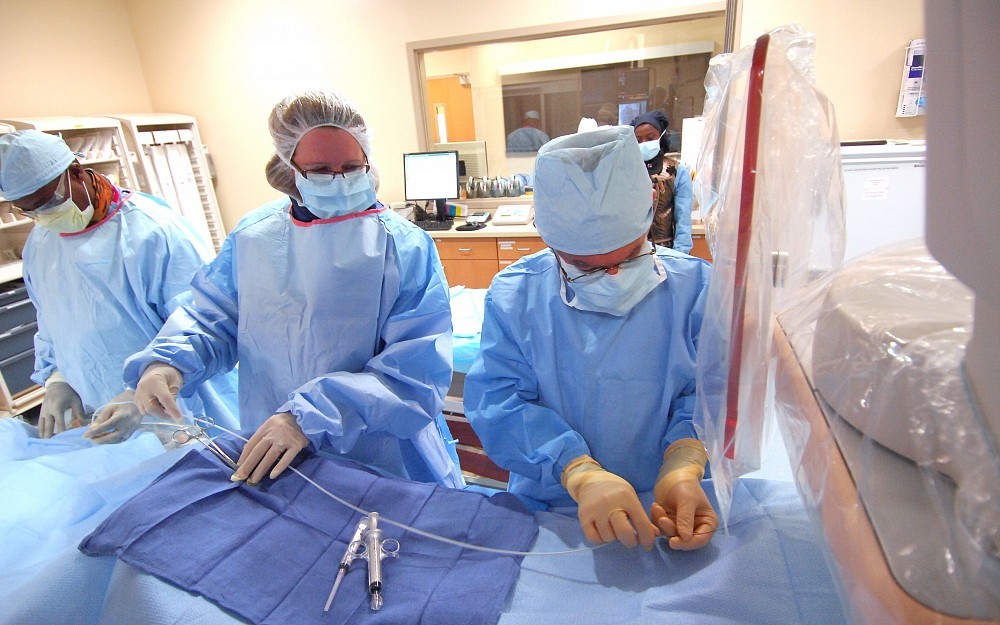
Massoud Leesar, MD, is a UC Health interventional cardiologist.
Tags
Related Stories
UC radiation oncologist speaks with Local 12 news about clinical trial for head and neck cancer treatment
August 10, 2026

Dr. Sara Medek, a UC radiation oncology professor, speaks with Local 12 news about a new clinical trial aimed at reducing radiation in certain areas while still treating cancer effectively but with fewer painful side effects.
Cancer Center director charts future based on collaboration, AI
August 10, 2026

David Gius, MD, PhD, was featured in a Cincinnati Business Courier article and The Cancer Letter’s “The Directors" podcast discussing his priorities and goals as he recently took the helm as director of the University of Cincinnati Cancer Center.
Bidirectional link between oral, kidney health calls for patient education, access
August 4, 2026

Despite growing awareness of the connection between oral health and chronic health conditions, patient awareness and access to dental care remain limited, according to University of Cincinnati experts who recently spoke with Healio | Nephrology News & Issues.