UC HEALTH LINE: Researchers Team Up for Study on Smell Loss, Neurodegenerative Disease

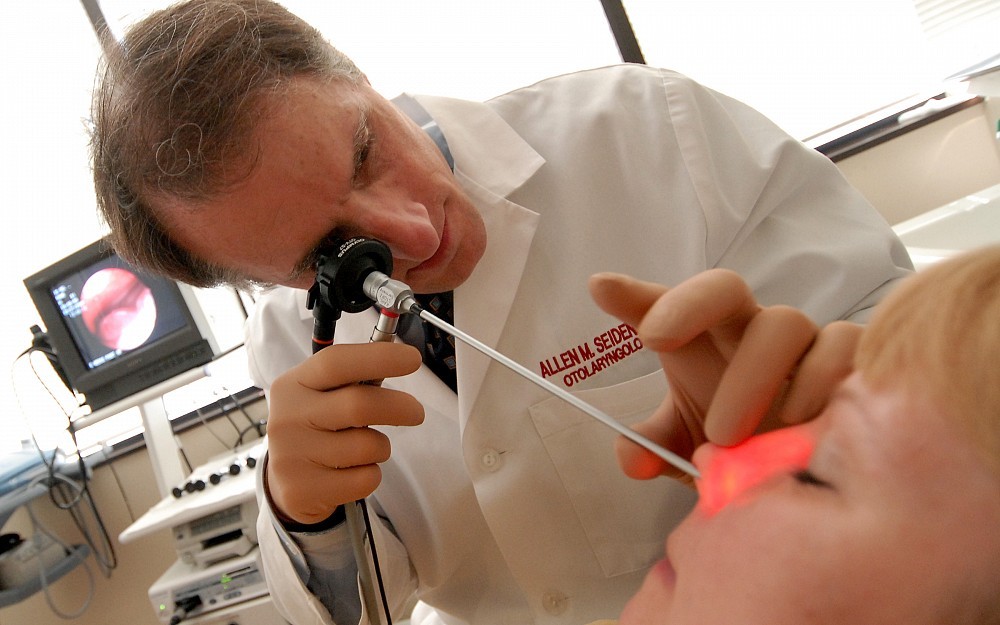
CINCINNATIMost of the patients with smell loss who visit UC Health otolaryngologist Allen Seiden, MD, can pinpoint the exact time they lost their sense of smell: it was after a bad cold, a head injury or an exposure to a chemical or other substance. But for other patients, their loss of a basic sense is completely unexplained.
Those patients, diagnosed with "idiopathic olfactory loss, have few treatment options. To try to understand more about their case and the possible causes of their condition, Seiden is partnering with UC psychology researcher Bob Frank, PhD.
They are conducting a study to find patients with idiopathic smell lossboth new and past patientsand learn how their loss of smell has progressed. More importantly, Seiden and Frank want to know another aspect of the patients health: Have they developed a neurodegenerative disease since their loss of smell?
"Its become apparent that one of the early manifestations of neurodegenerative disease, like Alzheimers, Parkinsons or Lou Gehrigs disease, is possibly olfactory loss, says Seiden. "For example, Alzheimers disease forms neurofibrillary tangles on the nerve fibers of the brainthey tend to form earliest on the olfactory nerves.
"If we are able to follow these patients over time, and they go on to develop some clear pathology or cognitive problems, that may suggest a link between olfactory loss and these diseases. If so, we can learn what the incidence rate is.
Frank, associate dean for research and graduate study at UCs McMicken College of Arts and Sciences, has studied taste and smellin particular, how to clinically evaluate the loss of smell. He says typical smell tests can be problematic for patients with early neurodegenerative disease.
"Naming a smell requires a lot of cognitive efforts, says Frank. "Patients need to remember previous smells and their name, as well as decide which odor is present. If a patient is in the early stages of Alzheimers disease or dementia and they dont do well on a smell test, they may just not do well on any test.
To better measure patients sense of smell, Frank developed a sniff magnitude test, which measures the length of a sniff without requiring patients to name the scent presented.
He says that when encountering an odor, people typically take a shorter, quickened sniff. The sniff magnitude test allows clinicians to measure patients sniff when presented with an odor: If they are not taking shorter sniffs, its likely because they cant smell anything at all.
The sniff magnitude test is just one of the tests patients in Seiden and Franks study will participate inthey also will perform basic memory and cognition tests to measure brain function.
Frank says a better understanding of the link between the loss of smell and neurodegenerative disease could lead more patients with idiopathic olfactory loss to further evaluation or specialized treatment early in their disease. But first, researchers need to be able to learn more about these patients.
"Were trying to categorize the relationships that we see emerging, says Frank. "Is olfactory loss mostly associated with the development of Alzhiemers and related diseases, or just occasionally? Were in the process of trying to better understand the relationship between the sense of smell and the diseases of aging and the aging brain. This study will allow us to begin that process.
Related Stories
Career fairs and resources for every Bearcat
August 11, 2026
UC's fall career fairs connect Bearcats with co-ops, internships, and jobs — plus free resume help, career coaching, and prep resources at the Bearcat Promise Career Studio.
UC radiation oncologist speaks with Local 12 news about clinical trial for head and neck cancer treatment
August 10, 2026

Dr. Sara Medek, a UC radiation oncology professor, speaks with Local 12 news about a new clinical trial aimed at reducing radiation in certain areas while still treating cancer effectively but with fewer painful side effects.
Cancer Center director charts future based on collaboration, AI
August 10, 2026

David Gius, MD, PhD, was featured in a Cincinnati Business Courier article and The Cancer Letter’s “The Directors" podcast discussing his priorities and goals as he recently took the helm as director of the University of Cincinnati Cancer Center.