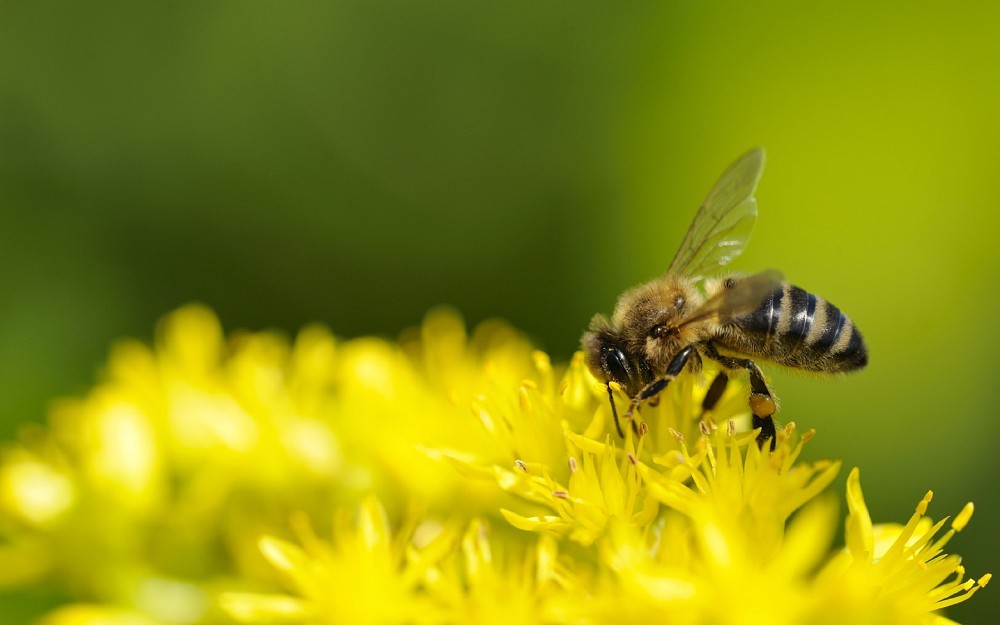
HEALTH LINE: Bees and Ticks, Not Snakes and Spiders, Pose Top Summer Risk

CINCINNATIThough snakes and spiders may seem scarier, its the bugs with stingers that pose the greatest risk for Cincinnatians in the summer, says a UC toxicology and wilderness medicine expert.
"The most dangerous arthropods were likely to encounter this summer all belong to the order Hymenoptera: bees, wasps, yellow jackets, hornets and ants, says Edward 'Mel' Otten, MD, professor of emergency medicine and director of the emergency departments toxicology division. "They can get into buildings, automobiles, clothes and are attracted by the food, flowers, scents and clothing that humans have.
While most people will not develop a serious problem when stung by one of these, Otten says a significant percent of people are allergic to stings and can develop a life-threatening anaphylactic reaction. The reaction can start with a rash and quickly progress to trouble breathing, trouble swallowing, low blood pressure and loss of consciousness.
He says the best way to avoid a sting is to avoid attracting bees or wasps: avoid leaving food around and dont wear strong scents or bright colors.
Otten says the next most dangerous summer bugs are the biting kind: mosquitoes and ticks. Both can carry diseases like encephalitis or Rocky Mountain spotted fever (which, although not seen in the Rocky Mountains, is common east of the Mississippi River).
To protect yourself and your family, use mosquito repellant when outside (especially after dusk) and check everyone, including pets, for ticks after walking in the park or woods.
Though many people fear snakes, Otten says that they generally are a very minor problemand those bitten by a snake were probably annoying the animal.
"It is a rare occurrence that a venomous snake bites a person who is not involved with the snake, he says. "The best bet is to not mess with snakes. It would be rare to encounter a venomous snake in Hamilton County, but if you dont approach any snake, you will probably never get bitten.
If you do get stung or bitten this season, below are Ottens best tips for treatment:
- A bee or wasp sting can be treated with an ice cube.
- Witch Hazel helps with mosquito bites and ticks should be removed with tweezers.
- Anyone allergic to stings should carry an Epi-Pen and know how to use it.
- Any bite or sting that involves more than a little tiny mark and minimal itching should be considered a medical problem and should be directed to a physician or emergency department.
- Any snake bite should be evaluated by a medical professional.
Tags
Related Stories
UC radiation oncologist speaks with Local 12 news about clinical trial for head and neck cancer treatment
August 10, 2026

Dr. Sara Medek, a UC radiation oncology professor, speaks with Local 12 news about a new clinical trial aimed at reducing radiation in certain areas while still treating cancer effectively but with fewer painful side effects.
Cancer Center director charts future based on collaboration, AI
August 10, 2026

David Gius, MD, PhD, was featured in a Cincinnati Business Courier article and The Cancer Letter’s “The Directors" podcast discussing his priorities and goals as he recently took the helm as director of the University of Cincinnati Cancer Center.
Bidirectional link between oral, kidney health calls for patient education, access
August 4, 2026

Despite growing awareness of the connection between oral health and chronic health conditions, patient awareness and access to dental care remain limited, according to University of Cincinnati experts who recently spoke with Healio | Nephrology News & Issues.