WVXU: Satellites zoom in on invasive plants in Cincinnati
UC research offers new tool to fight Amur honeysuckle

WVXU examined an innovative project by the University of Cincinnati to use satellite images to identify invasive Amur honeysuckle from space.
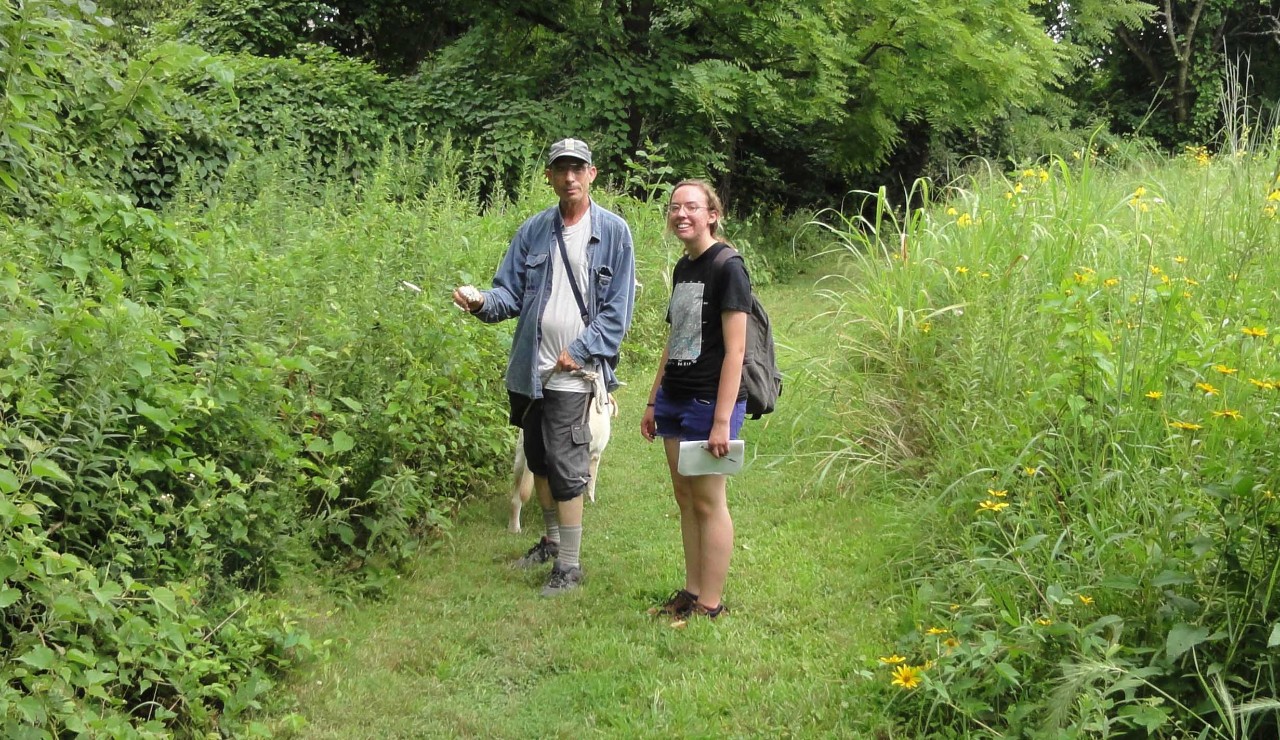
UC biology professor Denis Conover showed WVXU examples of the invasive Asian bush during a field trip with his Classification of Flowering Plants class at Burnet Woods.
Conover and UC geography graduate Bridget Taylor found that Landsat-8 images taken from orbit could identify the invasive bushes with 82% accuracy. Their study was published in the journal Ecological Restoration.
Amur honeysuckle and other invasive plants can crowd out native wildflowers and other plants.
Featured image at top: UC biology professor Denis Conover and UC graduate Bridget Taylor collaborated on a study of nonnative and invasive Amur honeysuckle. Photo/Richard Beck

UC biology professor Denis Conover spoke to WVXU about a research project that used Landsat-8 satellite images to identify invasive and nonnative Amur honeysuckle from space. Here he holds a native woody plant called devil's walking stick. Photo/Joseph Fuqua II/UC Creative + Brand
Related Stories
6 ways starting a GLP-1 medication could affect your emotions
May 20, 2026

When patients first start taking a glucagon-like peptide-1 (GLP-1) medication, they probably expect to feel full. But they might not anticipate how it can influence their emotions. The medications act on the stomach and the brain, said Malti Vij, MD, a University of Cincinnati adjunct associate professor in the College of Medicine's Department of Internal Medicine and a diplomate of the American Board of Obesity Medicine.
Pocket-sized population threat
May 18, 2026

The Financial Times took a deep dive into why populations around the world continue to be on the decline. The publication cited new University of Cincinnati research as part of the investigation that looks at the fall of fertility in the digital era.
Colorado silica dust trial could change the way industry does business
May 17, 2026

Betsy Malloy, Andrew Katsanis Professor of Law, at the University of Cincinnati, spoke with Bloomberg Law about how a Colorado trial could change the way the stone fabrication industry does business.