BBC News features UC's speech-language pathology research using ultrasound to track tongue movements
UC’s Suzanne Boyce uses ultrasound to analyze tongue movements during various ‘r’ sound pronunciations, helping children and adults with speech disorders across several languages

“BBC” online news featured University of Cincinnati speech-language pathology research on March 18.
The news looks at differences in how “r” sounds are pronounced in a particular language, suggesting whatever "r” sound a person uses is a glimpse into who they are, where they are from and who they want to sound like.

Suzanne Boyce
In the article, Suzanne Boyce, professor of communication sciences and disorders in UC’s College of Allied Health Sciences and adjunct professor in biomedical engineering, takes speech analysis one step further tracking tongue movements in adults, typically-developing children and children with speech and language disorders.
Her research published in Clinical Linguists & Phonetics and cited in “BBC” news suggests that what linguists call rhotic pronunciation for “r” sounds in all languages involves two different parts of the tongue at the same time — that is, the front part moves up and the very back root moves backwards in the throat.
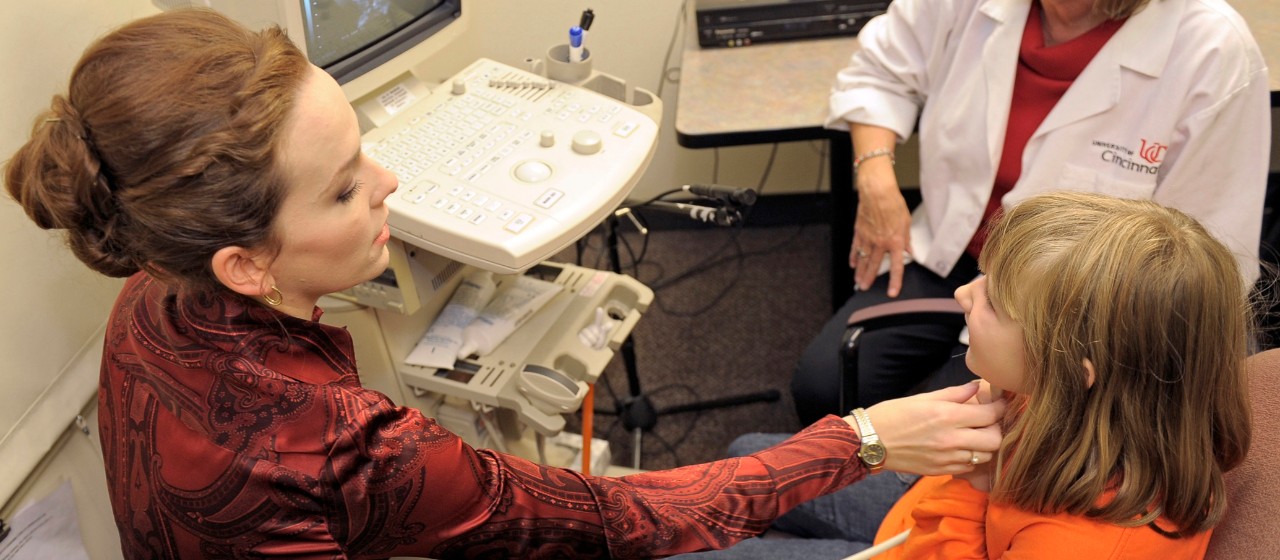
As part of her NIH-funded research with UC colleagues Michael Riley of psychology, Douglas Mast of biomedical engineering and Renee Seward of DAAP, and seed money from UC’s Office of Research Strategic Collaborative Funding Initiative, Boyce finds a critical value for ultrasound imaging in children's speech therapy. Using this technique, she creates games that offer real-time views of the tongue during the formation of speech, helping children learn to produce correct tongue shapes for difficult sounds.
This project is an example of UC’s commitment to excellence in research and innovation as part of its strategic direction called Next Lives Here.
“In the United States, not being able to say 'r' makes you sound childish,” says Boyce. “Kids get teased and might give up trying for careers that require them to sound strong and adult.
“That’s why our research focuses on new ways to provide biofeedback using ultrasound.”
More UC news:
Featured image at top: Sarah Dugan, post-doctoral fellow in UC CAHS communications sciences and disorders and CAS psychology, uses ultrasound biofeedback during speech therapy to help children visualize how their tongue moves while they pronounce certain words. photo/Corrie Stookey/CEAS Marketing
Tags
Related Stories
Cincinnati Enquirer: Behind the ventilator, specialists provide breaths for COVID-19 patients
April 21, 2020
Suzanne Bennett, MD, associate professor in the UC College of Medicine and UC Health anesthesiologist and critical care physician, spoke to the Cincinnati Enquirer for a story about ventilators, their operators and their roles in the COVID-19 pandemic. She said the respiratory therapists can be the lifesavers for some COVID-19 patients.