NatGeo: UC biologist talks about how snakes 'fly'
Biologist Bruce Jayne is studying the locomotion of the slithery serpents in his UC lab

University of Cincinnati biologist Bruce Jayne talked to National Geographic about the incredible way some tree snakes can "fly" from tree to tree.
Jayne, a professor of biological sciences in UC's McMicken College of Arts and Sciences, has been studying the four identified means of snake locomotion, which include sidewinding and the typical serpentine motion.
But some snakes have pushed these skills to extremes to sail through the air from treetop to treetop in the forest canopy while hunting or eluding predators. Scientists have identified five species of "flying" snake in Asia. They flatten their bodies to improve lift while they sail as far as 300 feet through the air, according to National Geographic.
"Really, how special is this ability in flying snakes?" Jayne asked the magazine. "If we look at their close relatives, can we actually see some precedents for their behavior? Maybe the flying snakes are just sort of at one end of a continuum."
Jayne has been studying the marvelous locomotive abilities of brown tree snakes, which are extremely adept climbers. These invasive snakes are believed to have island hopped to new territory such as Guam by using their incredible climbing skills to stow away on cargo planes and boats.
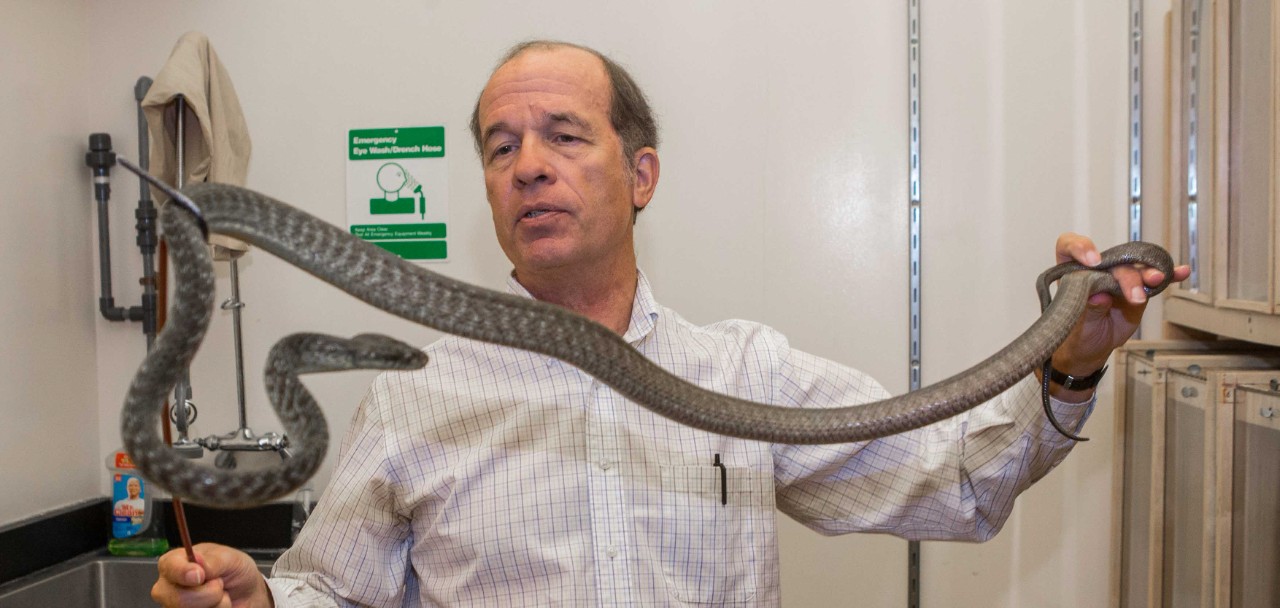
Featured image at top: UC biology professor Bruce Jayne uses a snake hook to move a brown tree snake in his lab. Photo/Joseph Fuqua II/UC Creative Services
UC's snake research in the news
New York Times: How the Snake Pours Its Way across the Ground
Newsweek: Watch this snake rip a crab to pieces with its mouth
Cosmos Magazine: For straight-line motion, snakes first relax
Science360: Snake movements yield engineering insights
UC Magazine: Whither the slither?
UC Magazine: Snake surprise
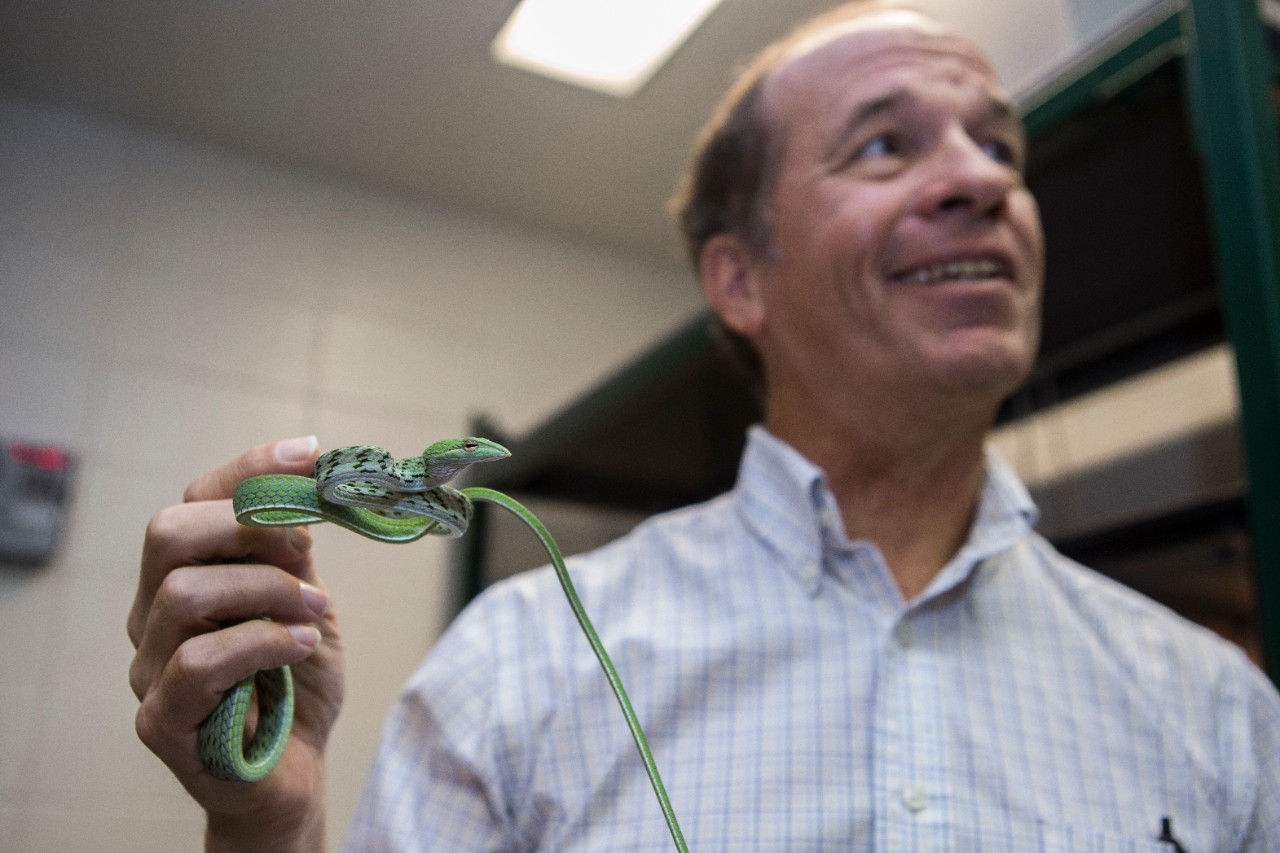
UC professor Bruce Jayne, holding a vine snake in his lab, is unlocking the surprising abilities of reptiles. Photo/Joseph Fuqua II/UC Creative Services
Become a Bearcat
Apply online or get more information about undergraduate enrollment by calling 513-556-1100. Learn more about UC's many undergraduate and graduate programs.
Related Stories
Parakeet males, females equally likely to fight
September 14, 2026
Researchers from the University of Cincinnati and Duke University studied captive monk parakeets and found that sex has little effect on who starts fights, who is targeted or who rises in the dominance hierarchy, as reported in Integrative & Comparative Biology.
UC part of $18 million statewide initiative to expand behavioral health workforce
September 14, 2026
The University of Cincinnati is part of Ohio’s $18 million Behavioral Health Scholarship Program, offering full in-state tuition to eligible social work, mental health counseling and clinical psychology graduate students who commit to serving underserved Ohio communities after graduation.
Could a whale really swallow a person whole?
September 10, 2026

Science News turns to a University of Cincinnati biologist to learn about animals that can swallow people whole as Hollywood gives moviegoers another reason to stay out of the water with the release next month of "Whalefall."