Gizmodo: Ticks pee all over themselves when they suck blood
Ticks can get overheated drinking warm blood, UC biologist Joshua Benoit explains

Gizmodo turned to University of Cincinnati biologist Joshua Benoit to explain why some ticks have unusual bathroom habits when they feed.

UC biologist Joshua Benoit. Photo/Joseph Fuqua II/UC Creative + Brand
Benoit, an associate professor of biological sciences in UC's College of Arts and Sciences, has studied ticks at UC's Center for Field Studies and at Great Parks of Hamilton County. He spoke about an independent study by the University of Tours in France published in BioRxiv.
Turns out Hamlet's vengeful phrase "Now could I drink hot blood" isn't far from the mark when it comes to a species of soft tick found in South America. The blood they drink can dangerously raise their body temperature.
"You go from 20 degrees Celsius to 34 degrees Celsius in, like, 10 seconds," Benoit told Gizmodo. "It's pretty abrupt, I mean, [humans] would pass out if we heated up that quickly."
Since ticks can't sweat like we do when we tuck into a hot or spicy meal, the South American ticks cool themselves off with pee instead. The ticks withstand their hot meal through evaporative cooling.
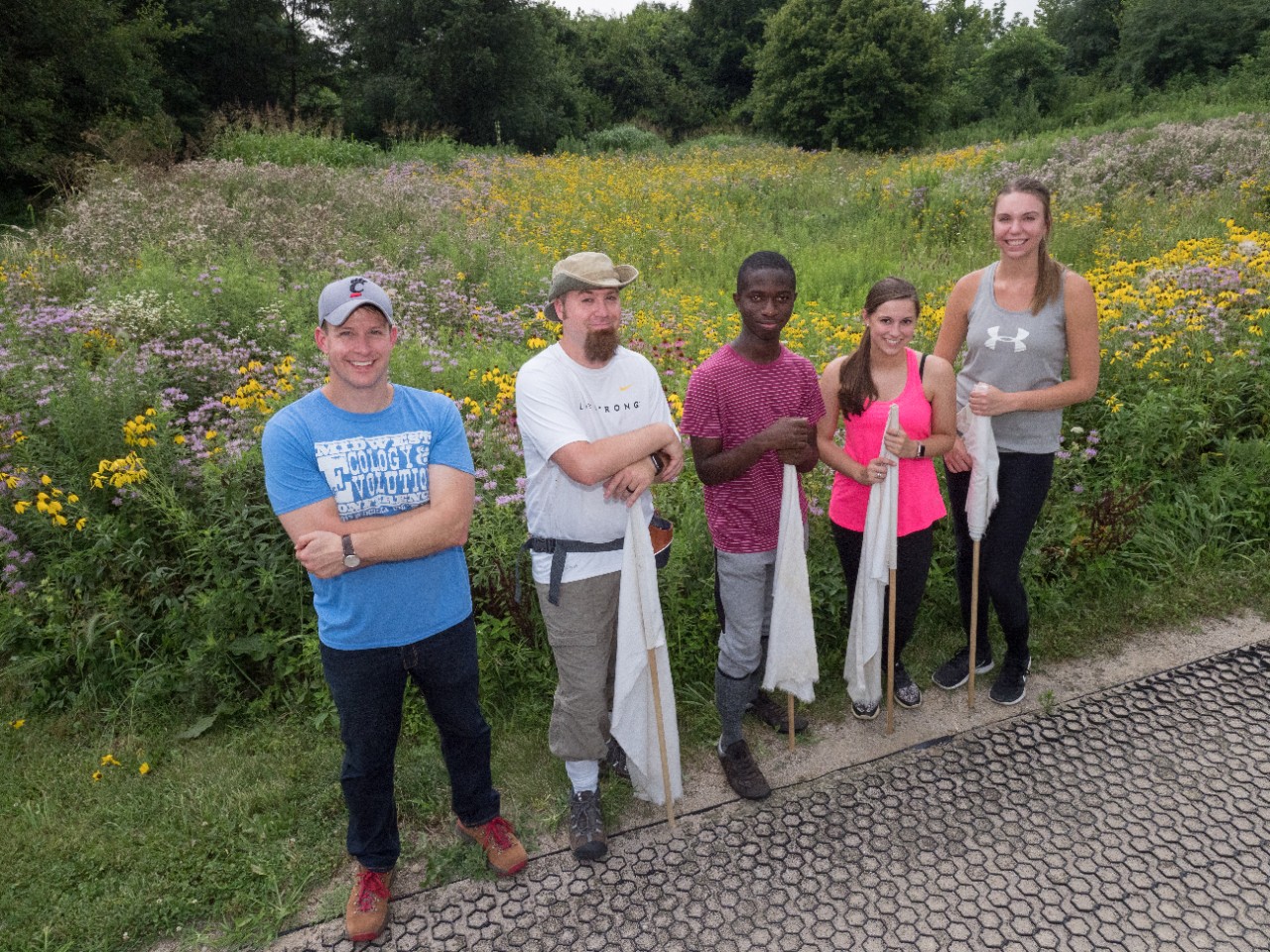
Featured image at top: UC associate professor Joshua Benoit, far left, collects ticks with UC biology students at UC's Center for Field Studies. Photo/Jay Yocis/UC Creative + Brand
More UC biology news

UC student Yi-Ting Sung holds up a spider in a biology lab. Photo/Joseph Fuqua II/UC Creative + Brand
Smithsonian: UC finds pollution in ancient Maya city
Twitter fight: Birds use social networks to pick opponents
WLW: UC biologist says get ready for return of cicadas
UC builds better test of animal vision
Bloomberg: P&G is developing next big thing in room buzzing with flies
What do Chinese opera masks and spiders have in common? A lot, as it turns out
Related Stories
Ohio ranked No. 1 for business by CNBC
July 10, 2026

Ohio is CNBC’s No. 1 Top State for Business in 2026. The University of Cincinnati helps fuel that success through co-op, innovation, talent development and close collaboration with the state.
UC students organize free health clinic happening July 11-12
July 10, 2026

The University of Cincinnati student chapter of Remote Area Medical is holding its annual free health clinic July 11-12. The clinic is open to adults and children, with no income requirements. Anyone in the area who needs medical, dental or vision care will have a chance to get it for free, with no insurance required.
Using math to figure out how bees make group decisions
July 9, 2026
UC mathematician Hyunjoong Kim used probability models to show how honeybee hives and other leaderless animals rely on a daring few risk-takers and a patient many to make group decisions.