U.S. News: A taxing problem for Trump
UC political scientist David Niven weighs in pre-debate on Trump's taxes

With Donald Trump debating for the first time as an incumbent president with a record to defend, Davin Niven speaks to U.S. News & World Report about how Trump's personal taxes will play out in the first presidential debate with Joe Biden.
"I think for the Biden campaign, this is a gift that helps him solidify his message, especially to those he's trying to earn back to the Democratic Party," Niven says of claims that Trump has paid very little in taxes in recent years.
"In Ohio, we saw four years ago that Democrats lost just as many union households as non-union. Biden is trying to win those folks back, and the tax issue just speaks to basic fairness and hard work."
Niven was also joined Washington Post reporter Dave Weigl for pre-debate discussion on WVUS’s Cincinnati Edition.
>Read more in the U.S. News article
>Listen to the WVXU interview here.
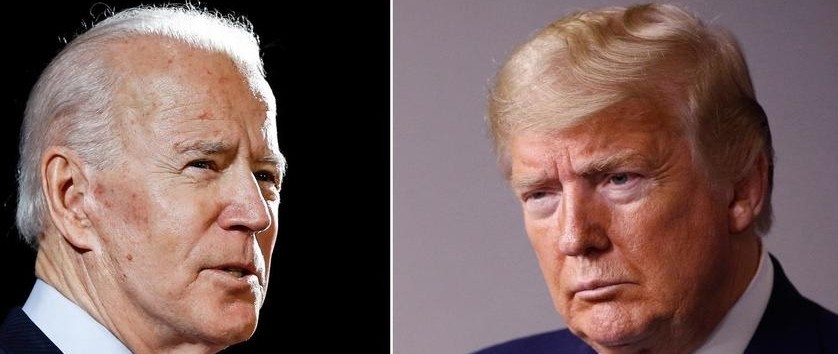
Featured image at top of Trump and Biden. Photo/The Associated Press
Impact Lives Here
The University of Cincinnati is leading public urban universities into a new era of innovation and impact. Our faculty, staff and students are saving lives, changing outcomes and bending the future in our city's direction. Next Lives Here.
Related Stories
Emeritus professor honored for gas turbine research
August 17, 2026
Mark Turner has been part of the University of Cincinnati's College of Engineering and Applied Science for 25 years. His work in the field of gas turbine simulation and design continues to leave a significant impact on the industry. He was honored by the American Society of Mechanical Engineers with the International Gas Turbine Institute Scholar Award. Turner is part of the Department of Aerospace Engineering and Engineering Mechanics at UC.
UC co-op earnings climb to $99.5 million
August 17, 2026
University of Cincinnati co-op students earned $99.5 million in 2025-26, a 5.69% increase, with 9,614 co-op enrollments and 1,798 employers across top industries.
UC expert offers advice to Cincinnati on climate change
August 14, 2026

In an op-ed, UC Associate Professor Bob Hyland talks about ways Cincinnati can become more resilient in face of climate change.