WVXU: Coronavirus hitting rural communities hard
UC assistant professor Diego Cuadros explains latest national trends for COVID-19

WVXU's Cincinnati Edition talked to a University of Cincinnati epidemiologist about how mortality rates from COVID-19 are surging now in rural America.
Assistant professor Diego Cuadros, director of UC's Health Geography and Disease Modeling Lab, told host Michael Monks that the pandemic is especially dire in rural counties of high-infection states.
Cuadros is part of UC's Geospatial Health Advising Group, which has issued several policy briefs to help health officials respond to the global pandemic. The group is composed of health, geography and statistical modeling experts from the UC College of Pharmacy and the UC College of Arts and Sciences.
"We started in Ohio analyzing health data in Ohio and looking at differences between rural and urban areas. The epidemic spread faster in urban than rural areas. But that was in the early stages of the epidemic," Cuadros said.
But now, Cuadros said, rural areas are seeing a surge in infections with higher mortality rates in rural counties of high-infection states. This is cause for concern because the population in rural areas skews older than that of urban areas. Likewise, rural areas typically have fewer medical resources, particularly intensive-care units.
"The epidemic doesn't behave exactly the same everywhere," Cuadros said.
Listen to the Cincinnati Edition segment.
Read more about Diego Cuadros' work in the latest issue of UC Magazine.
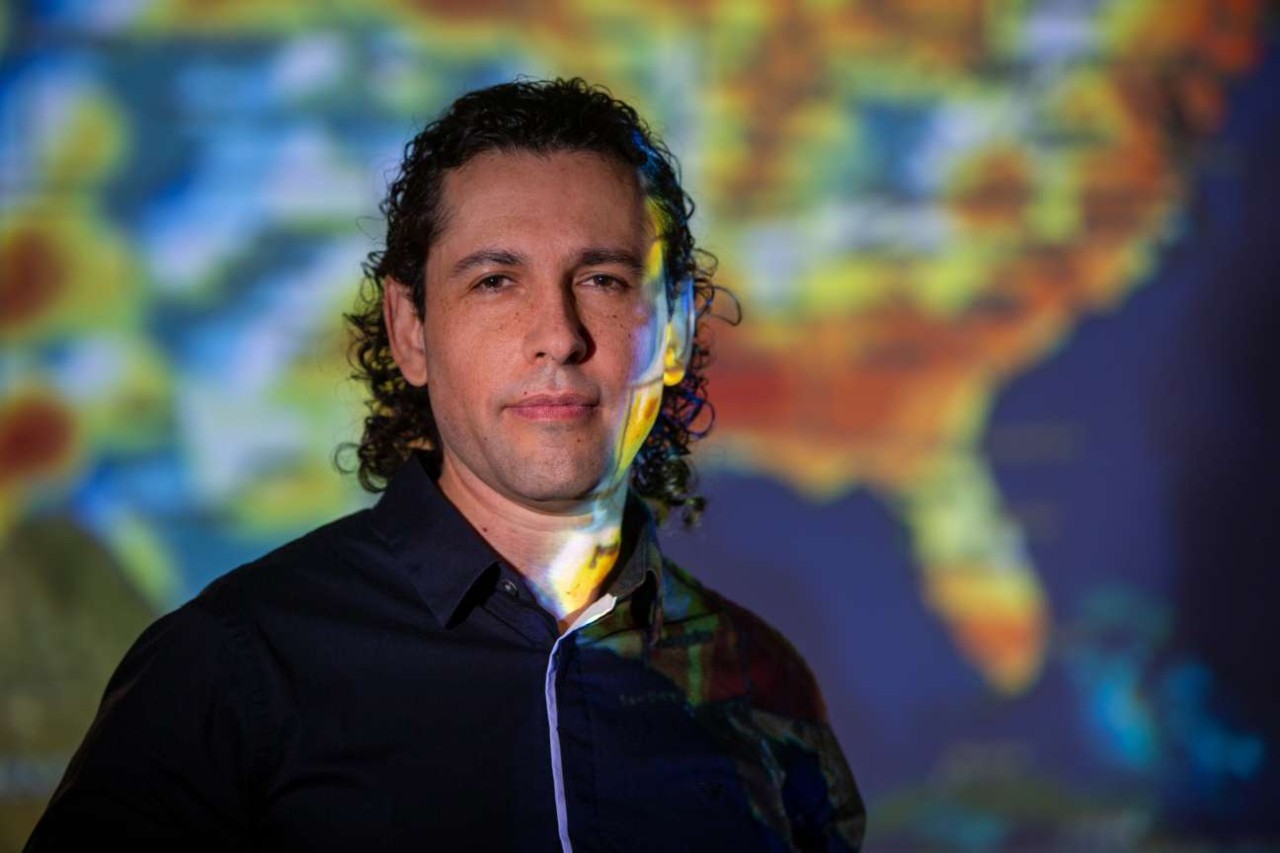
Featured image at top: UC assistant professor of geography Diego Cuadros is part of UC's Geospatial Health Advising Group, which has been tracking the COVID-19 pandemic in Ohio and the United States. Photo/Andrew Higley/UC Creative + Brand

A bivariate map compares mortality rates in the early months of the COVID-19 pandemic compared to the most recent months. Dark green indicates high mortality rates in the early part of the pandemic. Purple indicates high mortality in more recent months. And black represents high mortality on both periods. Graphic/UC Geospatial Health Advising Group
Related Stories
How phone scammers use your own voice against you
September 18, 2026

The Wall Street Journal recently did a deep dive on how artificial intelligence is making scamming people over the phone much easier, citing research by Kimberly Hyun, assistant professor of marketing at UC’s Lindner College of Business.
Gas prices spike... Again
September 18, 2026

UC economist Gary Painter goes through the tactics companies use to keep their consumer bases amid rising oil costs.
University of Cincinnati and Hamilton County work to lower overdose deaths
September 17, 2026

University of Cincinnati researchers and Hamilton County officials are using overdose data to identify Cincinnati hot spots and place free NaloxBoxes and fentanyl test strip dispensers where they are needed most to help prevent opioid overdose deaths.