WVXU: UC startup gains interest in its new technology
Cinthesis engineers new way to perform environmentally friendly chemistry

University of Cincinnati Venture Lab-backed startup Cinthesis is gaining interest from companies that are adding new products and want to go green, WVXU reported.
Cinthesis, whose facilities are based at UC, is working in the emerging field of mechanochemistry. This discipline is a way to perform chemistry without solvents, which could reduce waste and reduce the need for volatile organic compounds that can be harmful to the environment
“We had to invent and design and engineer a way to separate the components of the mixing and the thermal energy associated. No one had ever done that before,” James Mack, PhD, a UC professor of chemistry and Cinthesis’ soon-to-be chief executive officer, told WVXU.
Cinthesis is working with companies to implement this new technology.
“Cinthesis is designed to take processes companies have," Mack said. "We evaluate it. We look at the waste components and then we provide an alternative that is environmentally benign.”
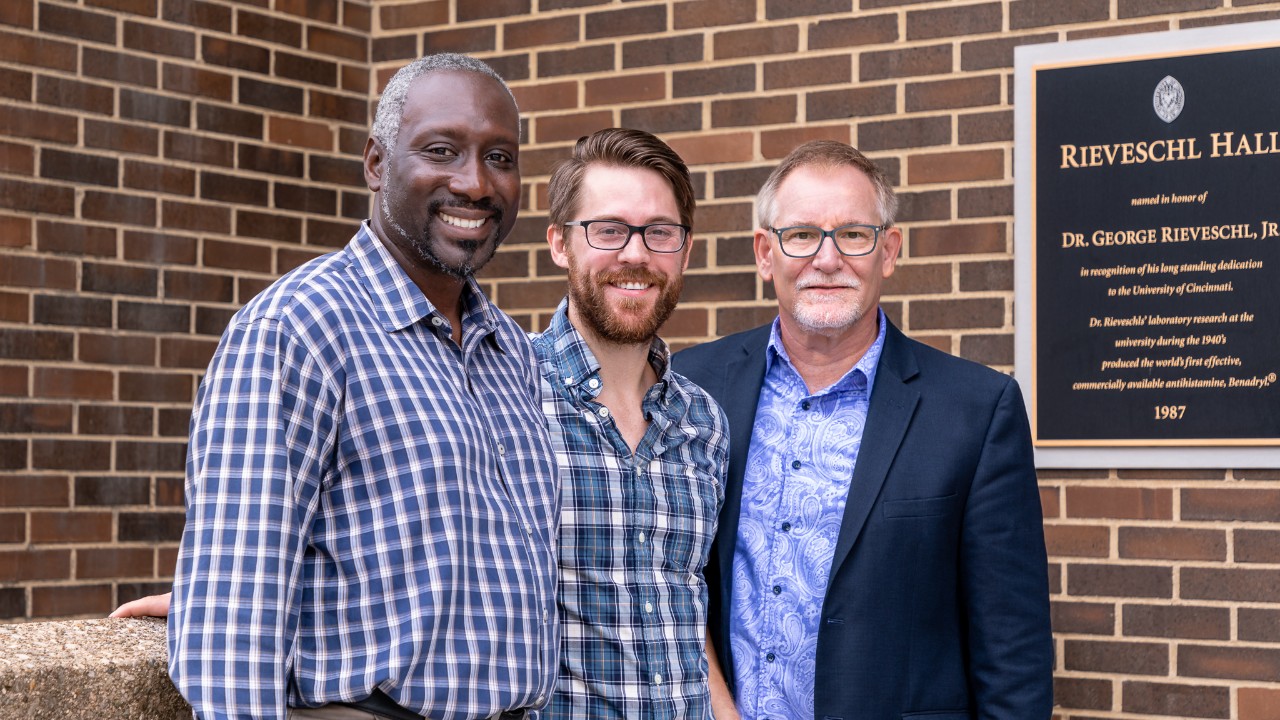
Featured image at top: From left, Cinthesis Technical Adviser James Mack, Chief Technology Officer Joel Andersen and CEO Edward Sawicki operate the startup that is based at UC. Photo/Cinthesis
Impact Lives Here
The University of Cincinnati is leading public urban universities into a new era of innovation and impact. Our faculty, staff and students are saving lives, changing outcomes and bending the future in our city's direction. Next Lives Here.
Related Stories
Mistakes to avoid when shopping for a product dupe
August 13, 2026

The University of Cincinnati’s Kelly Dobos was featured in an AARP article discussing ways to determine if “dupe” cosmetic products really are comparable to the more expensive name brand.
Ancient warming event hints at potential climate tipping point
August 12, 2026

Researchers say a spike in temperatures during an ice age 304 million years ago could inform what climate scientists are learning about rapidly changing conditions today.
What is a trademark?
August 11, 2026

Sean Owens, an adjunct professor in the Donald P. Klekamp College of Law, discussed trademark law with the Dayton Daily News. Owens is also a partner at intellectual property law firm Wood Herron & Evans in Cincinnati.