Midday Mindfulness
1819 Innovation Hub offers a workday break for better focus and productivity

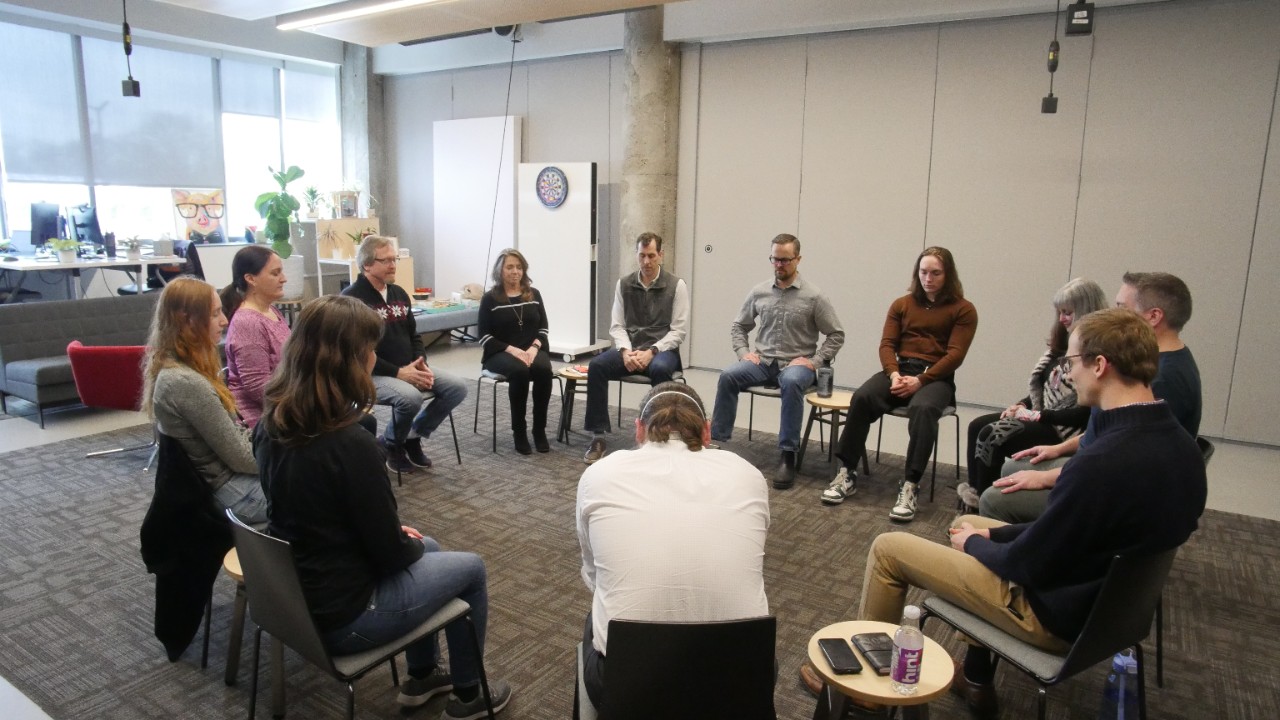
On a chilly winter day just before noon, corporate partners and staff at the University of Cincinnati’s 1819 Innovation Hub took a break from their workday to prioritize their mental well-being.
The 1819 Learning Lab team is leading the way in promoting workplace wellness and creating a positive environment for those who work in the 1819 building. The team hosted a session in their new space designed for immersive learning experiences that encourage connection and collaboration.
It was opening day for Midday Mindfulness, a program the organizers plan to host regularly. Soothing music set the tone with an open seating circle promoting the shared experience.
Rebecca Revalee, one of the founders of the Learning Lab, welcomed the 20 participants, who ranged from those who had never tried meditating before to those who practice regularly.
The idea behind this new initiative, Midday Mindfulness, was to create an opportunity for people to press the reset button.
Rebecca Revalee Co-founder and program manager of the Learning Lab
Why mindfulness matters
Studies have shown that incorporating mindfulness into the workplace has many benefits:
- Reducing stress and improving focus boosts productivity and efficiency.
- Mindfulness practices help individuals make better decisions, avoiding impulsive reactions.
- Taking time to clear the mind enhances creativity and problem-solving skills.
“We recognize the workplace is often hectic, competitive and stressful. We give our best effort to be efficient and focused, with countless distractions coming at us throughout the day. The idea behind this new initiative, Midday Mindfulness, was to create an opportunity for people to press the reset button,” Revalee said.
Tips for incorporating mindfulness into your day
During the session, Revalee led the group through brief prompts to practice awareness and breathing, sharing the following tips:
- Set a timer to take regular breaks throughout the day to stretch, breathe and clear your mind.
- Download an app that can help you practice mindfulness, such as Headspace or Calm.
- Take time each day to reflect on what you are thankful for and cultivate a sense of gratitude.
“Our commitment to developing Midday Mindfulness is an important step in the right direction,” said RJ Sargent, executive director of learning services. “We want to provide individuals with the time, space and tools to be more attentive and productive throughout the day. It doesn’t have to take a lot of time; even carving out 10 to 15 minutes can help.”
Midday Mindfulness sessions are another benefit for corporate partners of UC’s 1819 Innovation Hub. The goal for the Learning Lab is to use a variety of approaches to support mindfulness, such as guided meditations, journaling, yoga stretches, or taking a quiet moment to clear their minds in a calming space.
Sargent and Revalee said they received positive feedback on opening day from attendees, who said they appreciated the opportunity to step away from their screens and recharge.
Learn more
Read the Bearcat's Guide to the to the Calm App.
Learn more about corporate partnerships with UC's 1819 Innovation Hub or email.
Related Stories
DAAP professor and artist turns grass clippings into biodegradable art
August 27, 2026
Through biodegradable bioplastic made from grass clippings, Supermrin shows how creativity can connect science, sustainability and everyday life.
Designing with cancer patients' needs in focus
August 27, 2026
Kristina Shin is designing garments that prioritize the comfort, function and confidence of breast cancer patients, addressing a need often overlooked by traditional fashion.
DAAP students turn design skills into robotic solutions
August 26, 2026
Ten University of Cincinnati students joined 1819 Innovation Hub partner Sensory Robotics to test their design skills as part of the school’s Experiential Explorations Program