
UC launches school dedicated to environmental studies, solutions
Scholars, students work to meet the world’s climate challenges
The University of Cincinnati has launched its new School of Environment and Sustainability Studies (SEaS) within the College of Arts & Sciences.
“The faculty who worked to create a new unit for environmental studies were driven by the desire to improve curriculum, including adding new degrees, as well as increasing research opportunities,” says professor David Stradling, interim director of SEaS.
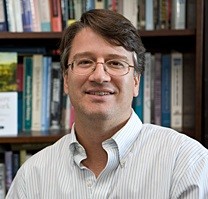
UC professor David Stradling, interim director of the new School of Environment and Sustainability Studies
The school will foster a community of scholars and professors who are dedicated to learning and teaching about today’s complex environmental challenges. SEaS aims to combine natural science, social science and humanities in an effort to create a transdisciplinary approach to tackling environmental issues, both in the classroom and surrounding community.
“After a summer of smoke, flooding, and extreme heat, I don’t think anyone can deny that environmental problems should be toward the top of our efforts as an institution,” says Stradling. “Finding solutions to the creation of resilient, healthful and just communities will be at the heart of the SEaS research mission, as they must be for the university as a whole.”
Stradling says students may not notice significant changes right away because “we aren’t suddenly adding lots of new faculty, and space for SEaS won’t be ready for us for a while.” Over time SEaS hopes to bring in new experts including ecologists, chemists, environmental sociologists, environmental policy analysts.
Diversifying the curriculum is something the SEaS team hopes to do in its first few years. “We are, of course, creating new classes about the environment every year, from Flowering Plant Classification offered in Biology to Environmental Humanities which will soon be offered through Religious Studies,” says Stradling.
After a summer of smoke, flooding and extreme heat, I don't think anyone can deny that environmental problems should be toward the top of our efforts.
David Stradling Interim Director, School of Environmental Studies and Sustainability
It’s no surprise that the field of environmental studies is constantly evolving, yet SEaS plans to ensure that its curriculum remains relevant and adaptive to emerging trends and challenges.
“The faculty are not just keeping up with new trends, but helping to create them, creating new knowledge,” says Stradling. “I learn just as much from my students as I do from my research. You won’t find a more active and engaged group of students than those who want to dedicate their lives to overcoming environmental challenges.”
Additionally, Stradling is anticipating having faculty offices and student space in Arts & Sciences Hall. “Students will have a place to interact with each other and instructors outside the classroom. We think this is essential for building community and networks,” he adds.
Through the creation of this new school, a student pursuing a degree in environmental studies and sustainability can look forward to a more personalized academic plan. Through the various courses offered, students will learn to think critically and strengthen their writing skills, both of which are necessary in the workforce.
Students with degrees in this field often end up making careers in environmental research, community planning and environmental law. SEaS plans on facilitating internships and co-ops for its students as well, hoping to get students working for government agencies, nonprofits, business, and ultimately gaining valuable experience in sustainability work.
“We already have relationships with many organizations outside the university, particularly nonprofits such as the Mill Creek Alliance, “ says Stradling, “but also government offices where so much important work gets done.”
Featured image at top: Wind turbines turn wind into electricity. Credit/Karsten Wurth on Unsplash.

By Makaela Mertic
Student Journalist, A&S Department of Marketing and Communication
artscinews@ucmail.uc.edu
Related Stories
UC launches Center for Environmental Engagement
October 5, 2026
UC’s College of Arts and Sciences is launching the Center for Environmental Engagement (CEE), a new interdisciplinary initiative focused on supporting communities that face disproportionate environmental risks. Faculty, students, community partners and environmental practitioners will work together to develop solutions to complex environmental challenges. The center’s mission is to serve the public by connecting communities with resources, subject matter expertise and community-engaged scholarship.
Digging into the bedrock of Cincinnati
October 5, 2026

Cincinnati magazine turns to University of Cincinnati Professor Carlton Brett to explain what Cincinnati was like as a shallow sea during the Ordovician period.
University of Cincinnati, UC Foundation launch UC Promise scholarship match
September 29, 2026
A partnership between the University of Cincinnati and the University of Cincinnati Foundation is expanding scholarship support for Ohio students.