U.S. News & World Report: Ovarian cancer causes, diagnosis and treatments

The University of Cincinnati's Amanda Jackson, MD, spoke with U.S. News & World Report about ovarian cancer risk factors and prevention.
“In most cases, the cause of ovarian cancer is unknown,” Jackson, University of Cincinnati Cancer Center physician-researcher and associate professor, division chief and vice chair in the UC College of Medicine’s Department of Obstetrics & Gynecology.
Jackson said the most common risk factor of ovarian cancer is increasing age, with additional risk factors including asbestos exposure, using fertility treatments and smoking and alcohol use.
“Since there is no screening test for ovarian cancer, patients are encouraged to speak to their doctor if they have any signs of ovarian cancer such as bloating, early fullness after eating, new constipation or nausea or unintentional weight loss,” Jackson said.
Read the U.S. News & World Report article.
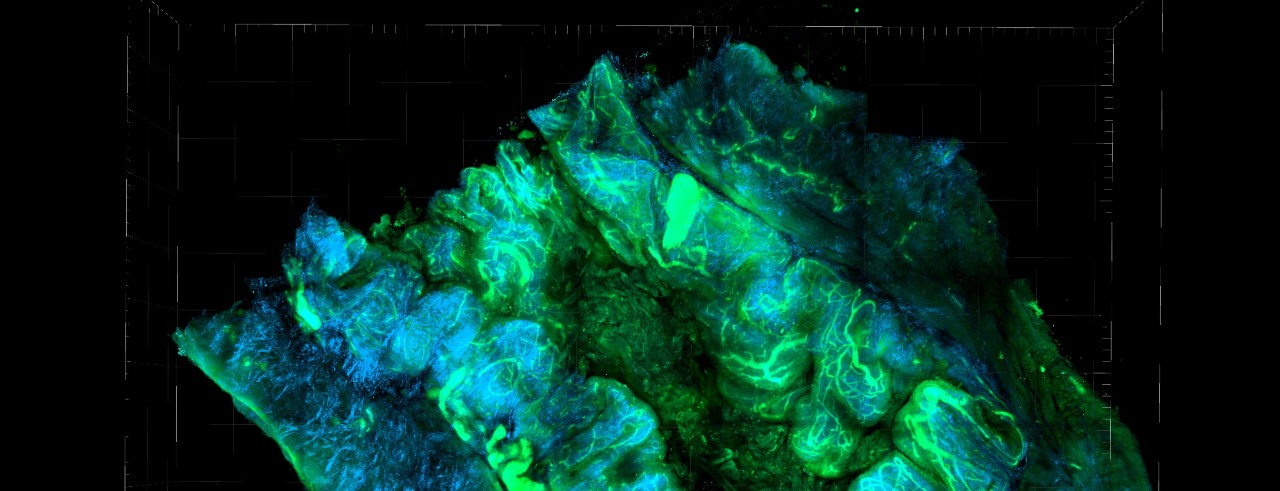
Featured photo at top: ovarian cancer tumor in animal model. Photo/National Cancer Institute.
Related Stories
Get to know CCM’s newest faculty and staff members
September 2, 2026
UC’s College-Conservatory of Music will welcome a variety of new faculty and staff members to its roster of distinguished performing and media arts experts, researchers and educators this fall.
Cancer Center plays key role in lab research, clinical trials for new pancreatic cancer drug
September 1, 2026

WLWT and WCPO highlighted the contributions of University of Cincinnati Cancer Center researchers that helped lead to the recent FDA approval of daraxonrasib, a new treatment for pancreatic cancer.
An expert pieced together this Roman document like a puzzle
September 1, 2026

National media highlighted a new project by UC Classics Assistant Professor Matthijs Wibier to piece together and translate an ancient Roman text from fragments buried in the desert for more than 1,600 years.