What causes endometriosis? Scientists are closer to finding out
UC researcher featured on NPR podcast

The life and research of Katherine (Katie) Burns, PhD, an associate professor in the Department of Environmental and Public Health Sciences in the University of Cincinnati's College of Medicine and a prominent endometriosis researcher, was recently featured on Short Wave, NPR's science podcast. It came after she was the subject of an in-depth feature article in Science Magazine. She and the Science reporter, Meredith Wadman, were podcast guests.
REGINA BARBER: Katie wouldn't get an endometriosis diagnosis until she was 20. A diagnosis was validating, but it didn't provide relief. To manage the pain and exhaustion, she would take naps during the week and sleep through the weekend. She tried acupuncture, diet changes, even hypnosis. One outlet that helped distract Katie from the pain was studying, which led her to a research career. Eventually, she decided to study endometriosis. As she published her findings, Science reporter Meredith Wadman took notice.
MEREDITH WADMAN: I found Katie because this force of nature named Linda Griffith, who's at MIT and develops endometriosis organoids, put me onto Katie's work that was quite new and exciting and said, this is worth looking at.
BARBER: That new and exciting work revolved around the origins of endometriosis. Previous thinking pointed to hormones as the root cause of the disease, but Katie's work was pointing in a different direction. The first clue was that hormone treatments in people with endometriosis didn't always work.
BURNS: You can quiet disease, but you don't cure it. You don't get rid of it.
BARBER: Then an experiment in mice showed a completely unexpected result.
BURNS: I tried to convince myself that I did something wrong. The data wasn't making sense.
BARBER: Katie did the experiment over and over again and kept getting the same results.
BURNS: It really showed that the immune system seems to be that important starting piece and not the hormone receptors.
BARBER: Today on the show, Science journalist Meredith Wadman tells us how researchers are piecing together the surprising origins of a disease that affects millions of people worldwide and how it could lead to a simple, non-invasive test, better treatments, and perhaps, one day, a cure.
Listen to the full episode of the Short Wave podcast from NPR.
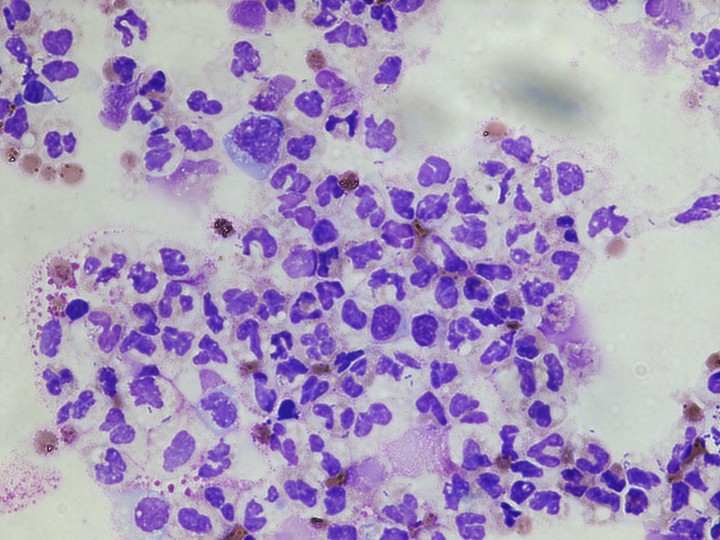
Featured image at top: Menstrual fluid shown under a microscope. Photo/Provided.
Related Stories
CCM welcomes new film and media scoring faculty member J.R. Paredes
May 20, 2026
UC College-Conservatory of Music Dean Pete Jutras has announced the appointment of J.R. Paredes as CCM's new Assistant Professor of Film and Media Scoring. His faculty appointment officially begins on Aug. 15, 2026. Paredes is a composer, music producer and audio post-production specialist whose work spans film, television and commercial music. His credits include original scores for feature films and series distributed on platforms such as Apple TV+ and Prime Video, as well as extensive work in sound design and mixing for film and media.
6 ways starting a GLP-1 medication could affect your emotions
May 20, 2026

When patients first start taking a glucagon-like peptide-1 (GLP-1) medication, they probably expect to feel full. But they might not anticipate how it can influence their emotions. The medications act on the stomach and the brain, said Malti Vij, MD, a University of Cincinnati adjunct associate professor in the College of Medicine's Department of Internal Medicine and a diplomate of the American Board of Obesity Medicine.