
Goodbye, Crosley Tower
The classic example of Brutalist architecture attracted fans, critics

Demolition is set to begin on one of the University of Cincinnati’s most iconic buildings.
Crosley Tower on Martin Luther King Drive will be taken down incrementally over the next 10 months. Love it or hate it, Crosley Tower has engendered surprisingly strong opinions about a topic most people take for granted: architecture. The crumbling facade of the 17-story building posed a safety issue while its functionality has been a subject of regular criticism.
For generations, Crosley served as an unmistakable beacon for UC’s Uptown campus, visible for miles all around many of Greater Cincinnati’s seven hills.
At UC, Crosley was a square peg in a round hole that was perfectly at home on a campus known for its eclectic and celebrated mix of architectural styles.
“It’s kind of a meme,” said UC graduate Anna Hargan, who works as an architectural designer for the local firm Drawing Dept.
She wrote her master’s thesis about the history and architecture of the building that for the last 57 years served students in subjects including chemistry, sociology, physics, geosciences and biology in UC’s College of Arts and Sciences.
“It’s considered ugly and unadaptable. But I see it more as monolithic or monumental,” Hargan said.
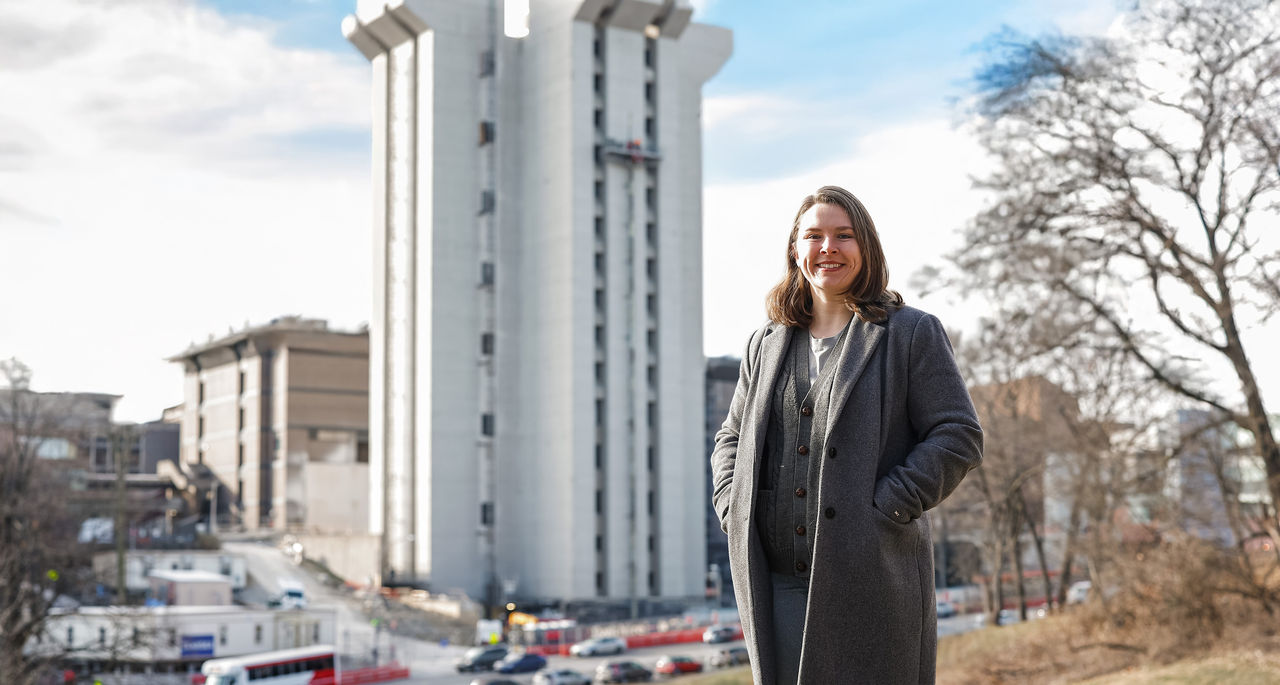
Crosley Tower's Brutalist architecture was the subject of UC graduate Anna Hargan's master's thesis in the College of Design, Architecture, Art, and Planning. Today, Hargan works as an architectural designer. Photo/Connor Boyle/UC Marketing + Brand
Share your memories of Crosley
Do you have any photos or memories of Crosley? Share them with the UC News team for a chance to be featured.
Unusual construction
Crosley is a classic example of Brutalist architecture, a style characterized by unadorned materials like bare concrete and steel, often boldly juxtaposed against open space.
It’s named for UC alumnus Powel Crosley Jr., a graduate of UC’s College of Law and College of Engineering and Applied Science. He invented the Crosley radio.

A bronze bust of Charles Burchard. Photo/Virginia Tech
The building was designed by the late architect Charles Burchard, who left Cincinnati to become founding dean of Virginia Tech’s School of Architecture.
Called simply Building A2, Crosley was erected over 18 days using a single-pour technique in which wet concrete was poured into forms continuously around the clock until it was finished.
This is the same construction method that allowed the U.S. Army Corps of Engineers to erect thousands of concrete towers along the East Coast to keep watch for enemy submarines during World War II. Standing as much as seven stories high, the United States built as many as 15,000 submarine watchtowers along its coastline, only a few of which remain.
Geosciences Professor Emeritus Warren Huff recalls watching workers pour Crosley’s concrete from his office over the span of nearly three weeks.
“I could see the concrete emplacement,” he said. “The university spent a lot of time and effort to get no-strike clauses signed by the contractors. That was because once they started pouring the concrete in the mold, it was a continuous process that lasted several days. The mold had to be slowly raised and continuous concrete was poured into it. Fortunately, it all worked just fine.”
Crosley’s 17 concrete stories rise together in four wings topped with a protruding concrete lip like an enormous chess rook overlooking Burnet Woods. The only decorations are twin circular windows like eyes that top each decorative wing and parallel rows of windows on each of its four exterior faces, giving the building its exquisite symmetry.
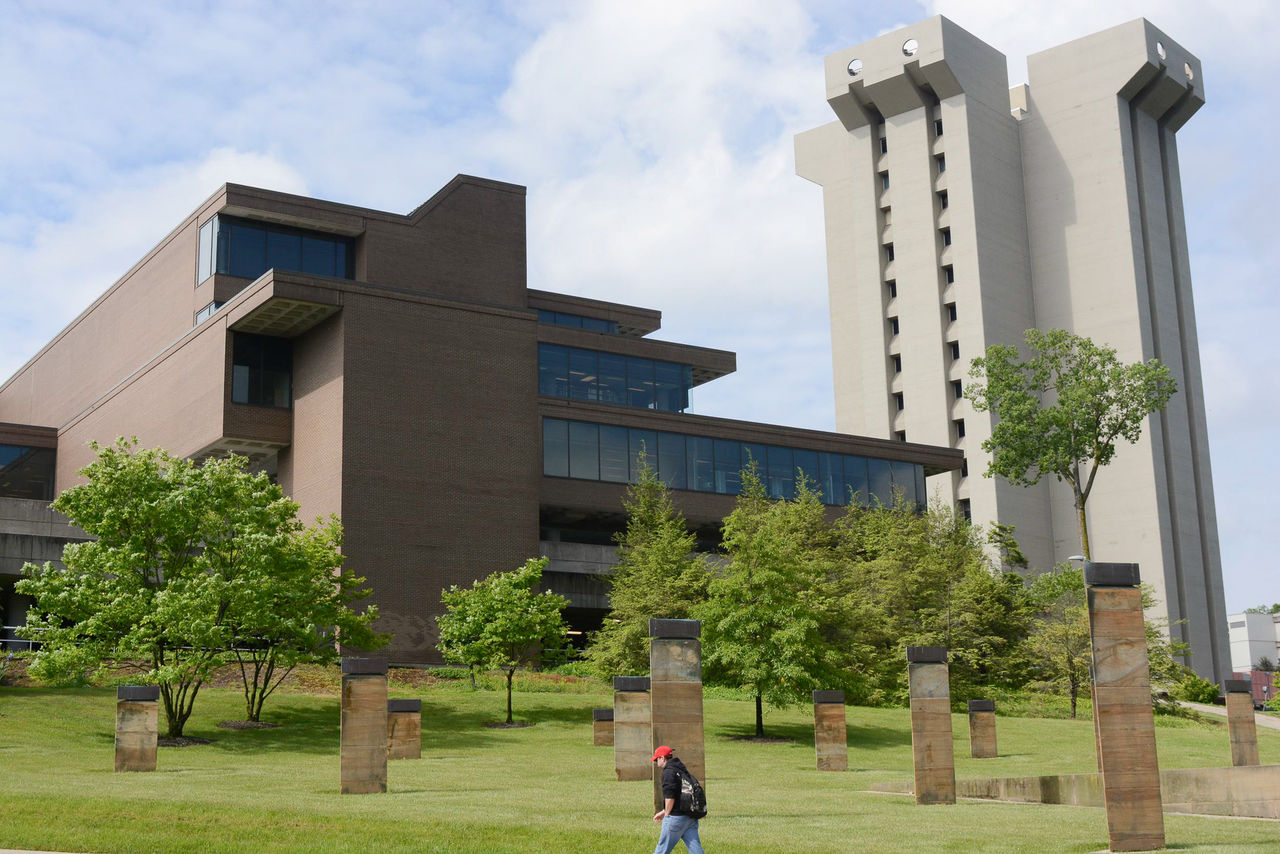
Crosley Tower is an example of Brutalist architecture that has stood on UC's Uptown campus since 1969. Photo/Lisa Britton/UC
Dismantled in sections
UC hired international construction firm Skanska to oversee the demolition. Most recently, Skanska renovated UC’s Old Chemistry, which reopened last year.
“Crosley Tower has been part of our community for generations, and we recognize the memories and meaning it holds for so many Cincinnatians,” said Chris Hopper, executive vice president and general manager of Skanska’s Cincinnati office.
“As demolition begins, our focus is to carry out this work safely, respectfully and with minimal impact on our neighbors. Because of the tower’s one-of-a-kind design, the structure will be dismantled in engineered sections,” Hopper said.
“We’re working with O’Rourke Wrecking Company and THP Limited engineering on this intentional, methodical approach that reflects our responsibility to the surrounding community as we thoughtfully refresh the northwest corner of the University of Cincinnati’s campus,” he said.
I don’t think there will ever be anything like Crosley Tower.
Anna Hargan, UC Class of '22

Demolition crews do site work at the base of Crosley Tower. Photo/Connor Boyle/UC Marketing + Brand
Crosley’s design elicits strong opinions.
“Its infamous identity has nurtured an unexpected level of appreciation,” Hargan wrote in her thesis published in 2022.
The Cincinnati Enquirer wondered last year if the building was a Disney villain’s lair or an engineering miracle.
Engineer John Nuckels on LinkedIn called it a “giant Brutalist concrete nail” but conceded, “I will miss it.”
“No other architectural style elicits emotional reactions as Brutalism,” wrote Australian architect D.J. Huppatz. “Think monolithic concrete buildings composed of blunt rectangular forms, devoid of colour, decoration or symbolism, with cavernous interiors that complement the exterior’s hulking, inhuman scale.”

Crews worked for months to prepare Crosley Tower for demolition after faculty moved offices, classrooms and labs to spaces in the new Clifton Court Hall, Rieveschl Hall and the remodeled Old Chemistry. Photo/Connor Boyle/UC Marketing + Brand
Crosley-inspired font

UC graduate Juju Stojanovic created a font inspired by Crosley Tower while working in co-op at a design company in New York. Image/Juju Stojanovic
Crosley was a fixture of everyday life for UC student Juju Stojanovic, who grew up blocks away. She walked past Crosley every day when she came to UC to study communication design in the College of Design, Architecture, Art, and Planning.
She created a Crosley-inspired font she calls Crosley Display while working in a co-op in New York. In co-op students divide the year between dedicated classroom instruction and full-time employment with a company in their chosen field.
“There’s something poignant about documenting it this way,” she said. “Design became a way to preserve it.”
In a tribute she posted to LinkedIn, UC doctoral graduate Deirdre Piedmonte suggested that Crosley should be remembered most for the scientific work that took place inside its concrete walls.
She worked on the ninth floor of Crosley in the lab of the late UC biochemistry Professor Richard Day where she was inspired by the likes of UC chemist George Rieveschl, inventor of Benadryl; Edward Deutsch, a pioneer of nuclear medicine; and John Trela, who revolutionized PCR tests used around the world to study DNA.
“Their groundbreaking work set a standard of discovery, mentorship and curiosity that still resonates today,” Piedmonte said.
Goodbye, old friend — thank you for watching over us.
Anna Hargan, UC Class of '22
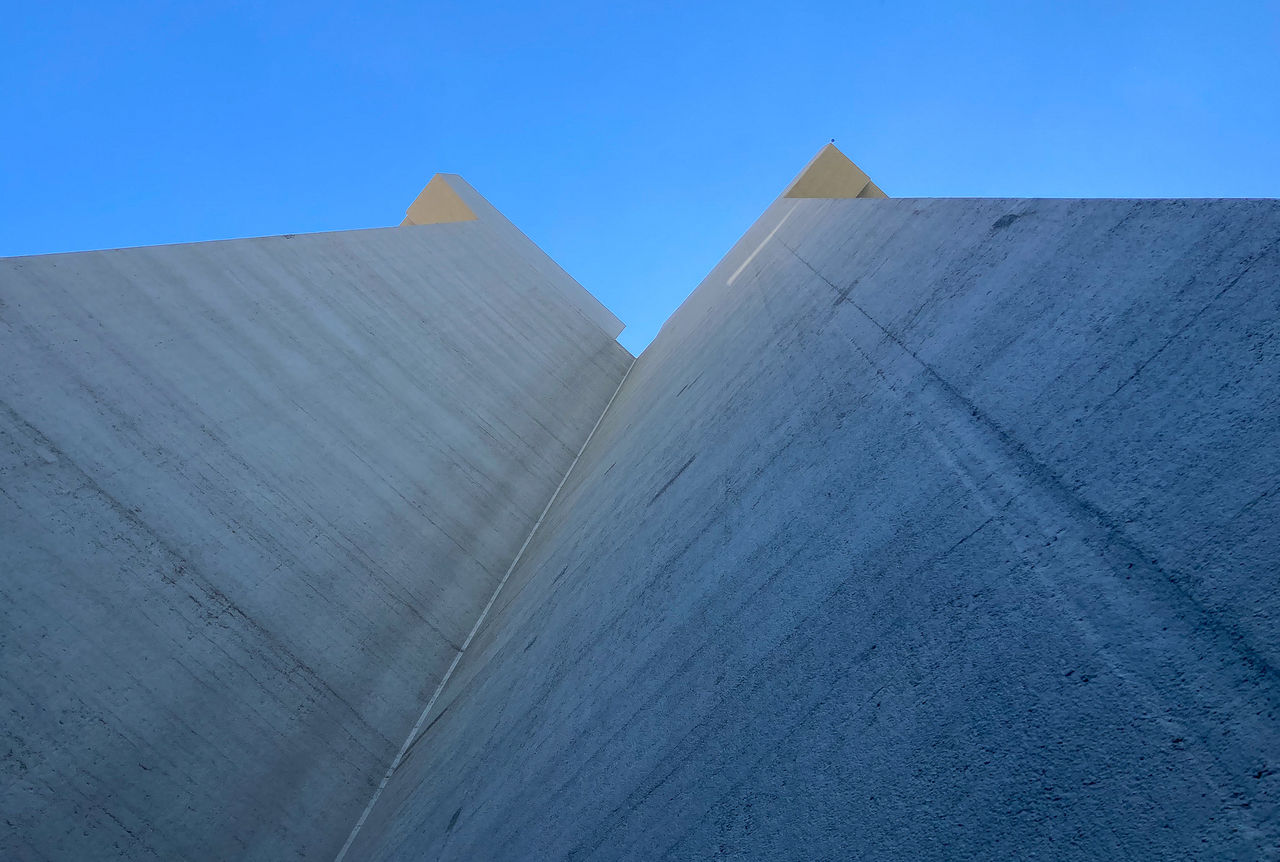
The sheer, symmetrical concrete walls of Crosley Tower rise up to the sky. UC students, faculty and alumni say Crosley Tower was one-of-a-kind. Photo/Michael Miller
End of Brutalist architecture
Hargan said many examples of Brutalism such as Crosley are disappearing as these postwar buildings are deemed unadaptable for today’s uses. With the high cost of concrete, Hargan said cities are unlikely to build others like them.
“I don’t think there will ever be anything like Crosley Tower,” she said.
But she has hope that architects of the future will come to appreciate the simplistic beauty of Brutalist architecture.
“In the end, I believe there is beauty in things that do not last forever,” Hargan said. “Though it is bittersweet to see something I admire demolished, I will remember Crosley fondly and grieve the loss of a structure so unique and monumental on campus.
“Goodbye, old friend — thank you for watching over us.”
Featured image at top: A crane towers over Crosley as demolition begins. Photo/Connor Boyle/UC Marketing + Brand. Angela Koenig contributed to this report.
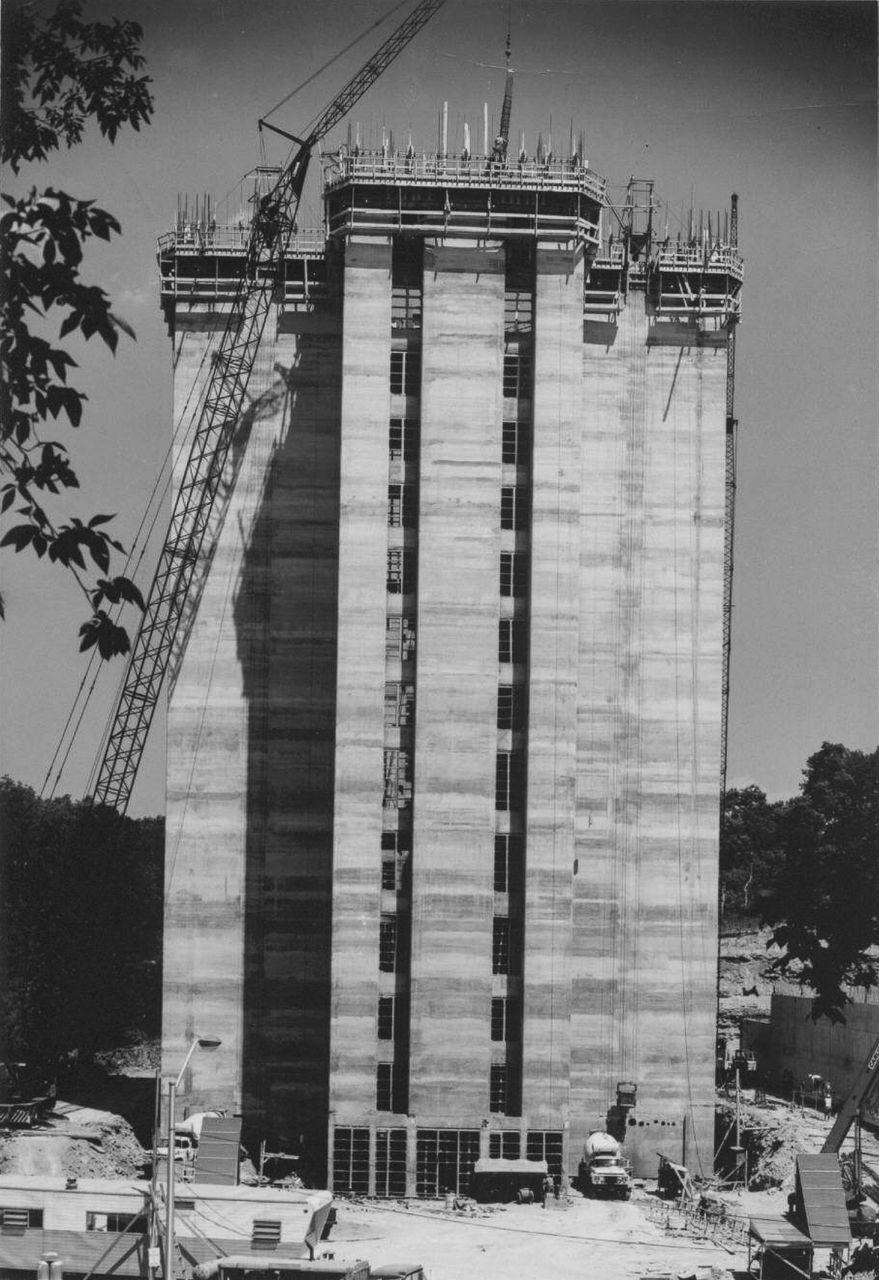
Crosley Tower was erected over 18 days using the continuous-pour method of construction. Photo/UC Planning + Design + Construction
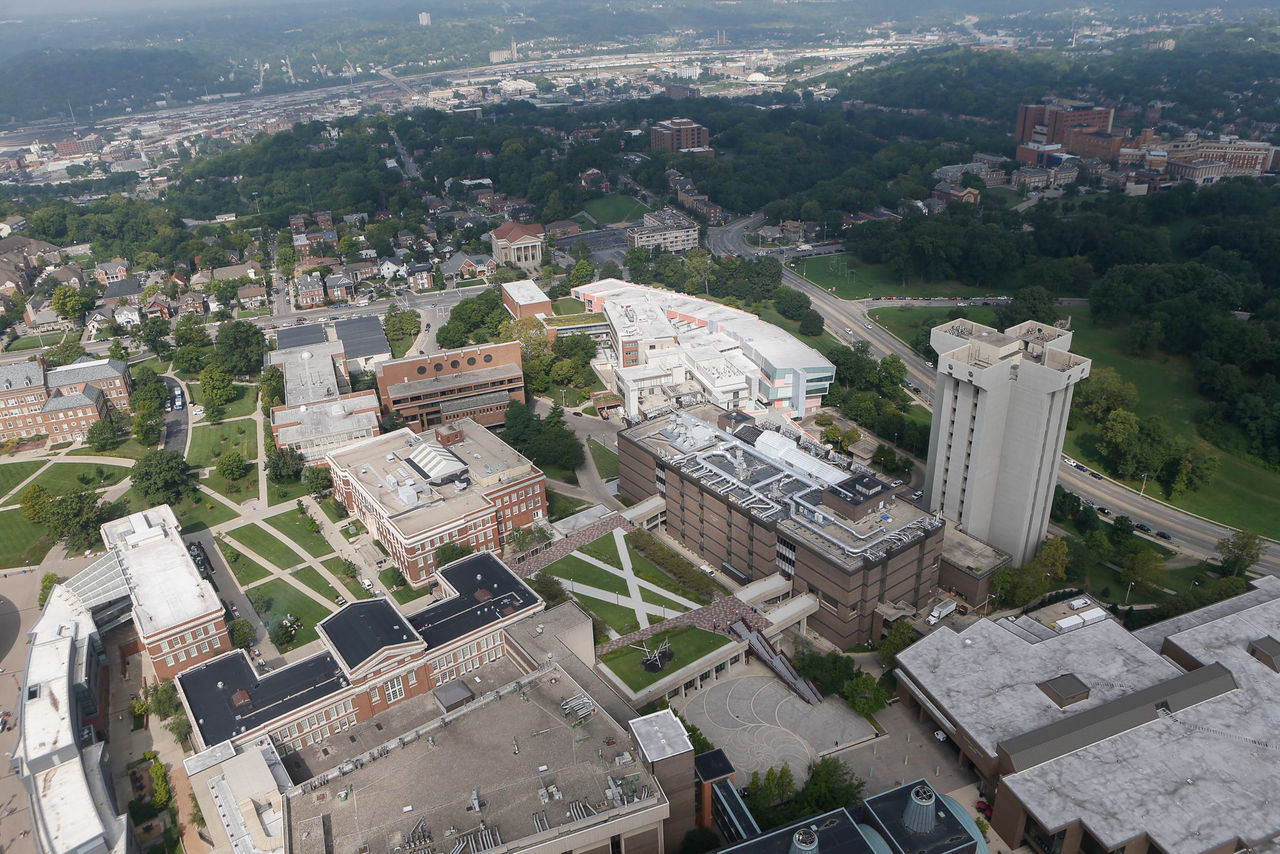
Crosley Tower was a part of the Cincinnati skyline since 1969, visible from many parts of Cincinnati and Northern Kentucky. Photo/Joseph Fuqua II/UC
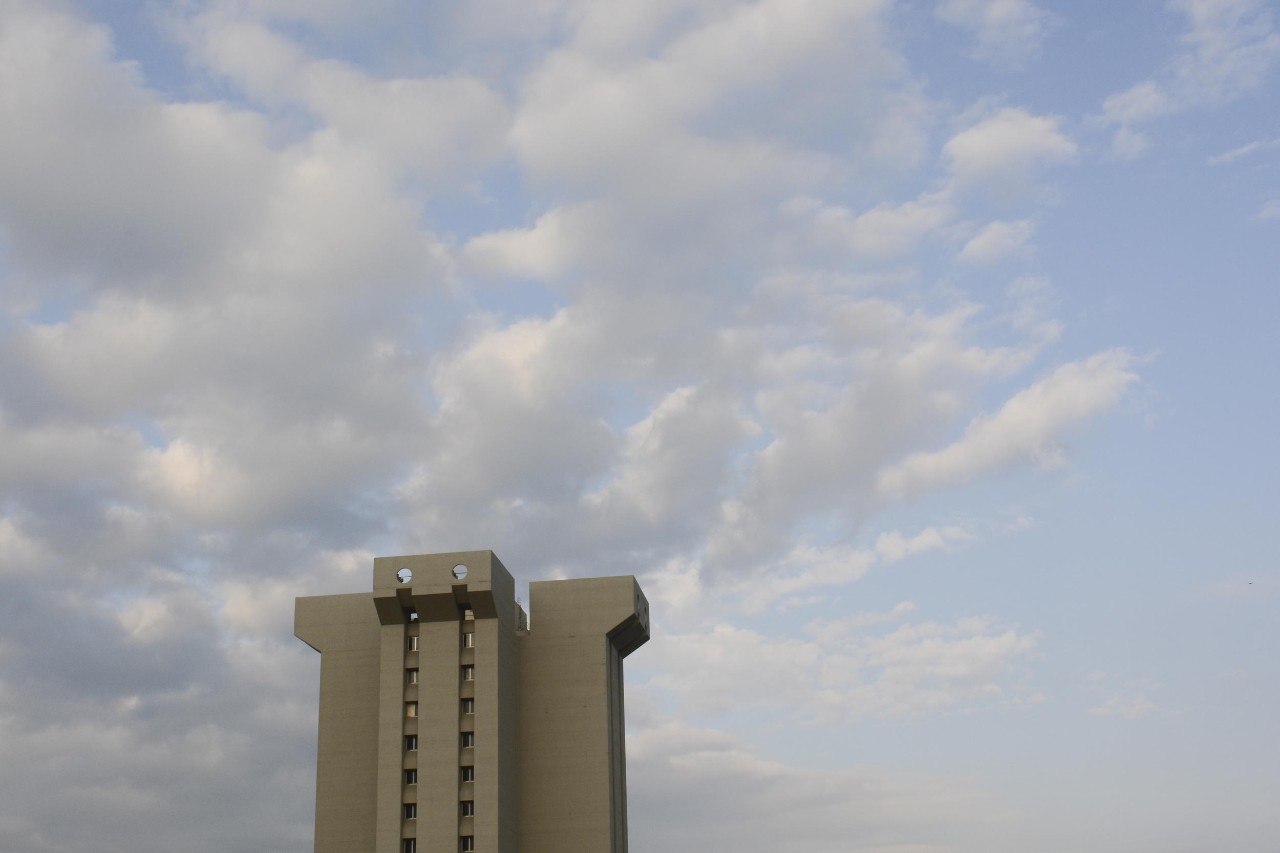
Crosley Tower on a cloudy day in 2016. Photo/ Lisa Britton/UC Marketing + Brand
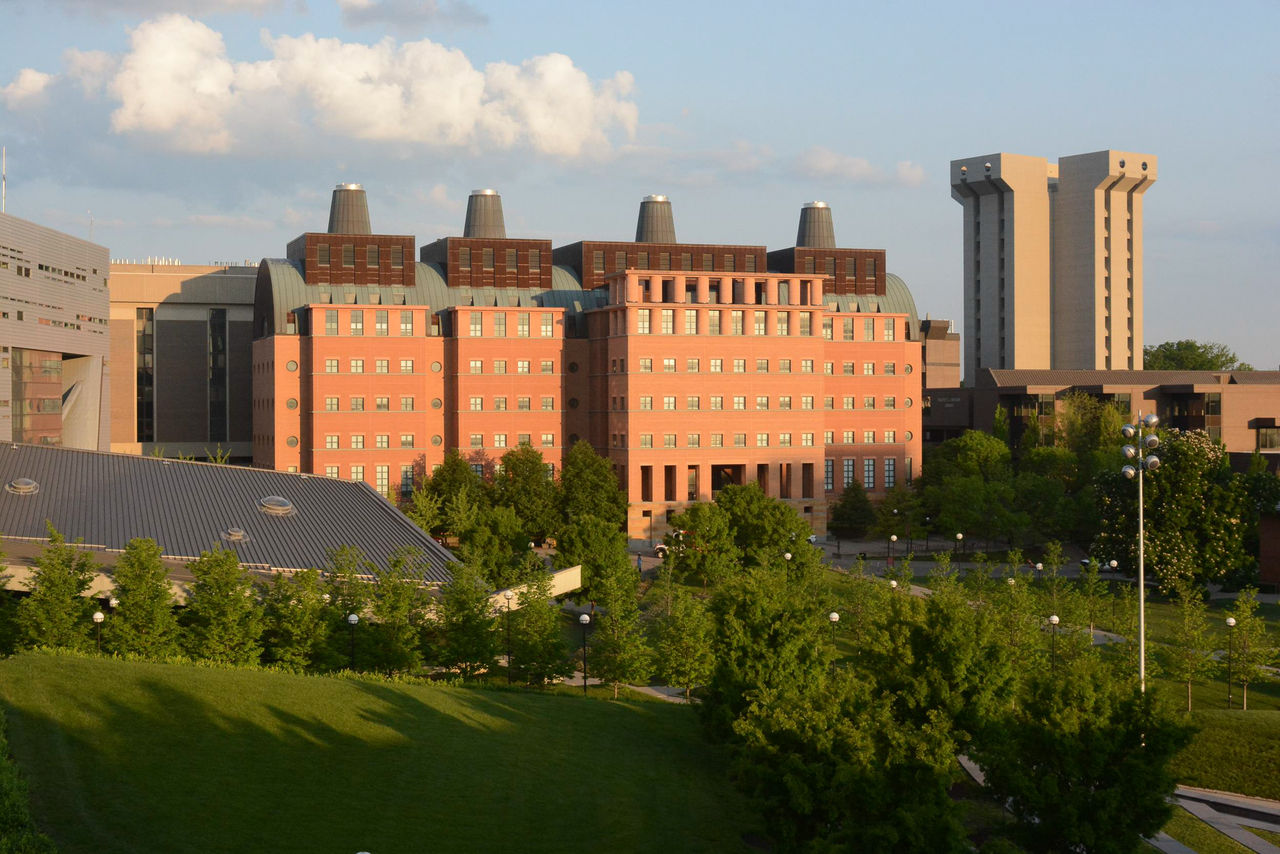
Crosley's Brutalist architecture joined an eclectic and celebrated mix of architectural styles on UC's Uptown campus. Photo/Andrew Higley/UC

UC Assistant Professor Pietro Strobbia conducts chemistry research in Crosley Tower in this 2024 photo. Fans of Crosley say they will remember the building most for the influential research that took place there. Photo/Andrew Higley/UC
UC's iconic Crosley Tower is recognizable even in silhouette. Photo/Event Services
Bearcats for Life
Join us as we redefine what it means to be Bearcats — where every learner is supported, valued and equipped to tackle the challenges of tomorrow. It’s our promise.
See more Bearcats for Life stories and share your own.
Related Stories
UC‘s College of Arts and Sciences taps innovative new leadership
December 20, 2023
The College of Arts and Sciences announced Ryan J. White and Rina Williams as the newest divisional deans of Natural Sciences and Social Sciences. White and Kennedy’s inclusion will bring new focuses and structure around student success and the college of Arts and Sciences’ advancement. Both will officially begin their new terms on Jan. 1, 2024.
Check out UC's latest innovations
March 23, 2026
In an era of constant innovation, UC’s College of Arts and Sciences (A&S) raises the bar high as they host the second annual Discovery in Action Showcase on March 31, 2026. This event will feature projects that will be presented by faculty, researchers and students representing the Portman Center, UC Field Center, the Arts and Sciences Co-Op program, various language studies, and many of the other areas of study that fall under the umbrella of Arts and Sciences.
Haaretz: UC study sheds light on environmental collapse
June 29, 2020
Haaretz and other international media report on UC's research into ancient Maya water pollution.