UC HEALTH LINE: Thyroid Testing May Shed Light on Baffling Problems

CINCINNATIFor something that plays such an important role in the bodys metabolism, the thyroid keeps a surprisingly low profile.
The butterfly-shaped gland located in the front of the neck doesnt exactly shout out clear warning signs when it has a problem. So with January marking Thyroid Awareness Month, its a good time to make sure your thyroid is not the cause of any baffling health issues you might be experiencing.
The thyroid makes and stores hormones that help regulate the heart rate, blood pressure, body temperature and the rate at which food is converted to energy. Health risks include underactive or overactive thyroid, enlarged thyroid (goiter) and cancer.
Someone who has an underactive thyroidknown as hypothyroidismmight feel tired or experience weight gain or cold intolerance, says David Steward, MD, an associate professor in the University of Cincinnati College of Medicines otolaryngology department. Such symptoms can have many causes, Steward says, but its a good idea to have the thyroid tested sooner rather than later.
Its a very simple blood test, and for patients with those symptoms its the first test we give, he says. If it comes back normal, we can rule the thyroid out as the problem.
An overactive thyroidknown as hyperthyroidismtends to have more overt symptoms, according to Steward. Patients might be jittery, experience irregular or fast heartbeats or lose weight without trying.
Underactive thyroid can be treated with the synthetic thyroid hormone levothyroxine, marketed under several brand names including Synthroid, Levoxyl and Levothroid. Its taken in pill form, with the proper dosage determined via blood test monitoring.
Treatment of overactive thyroid is more complicated and can involve surgery, drugs or radioactive iodine, Steward says. He recommends that patients consult an endocrinologist to determine the proper course of therapy.
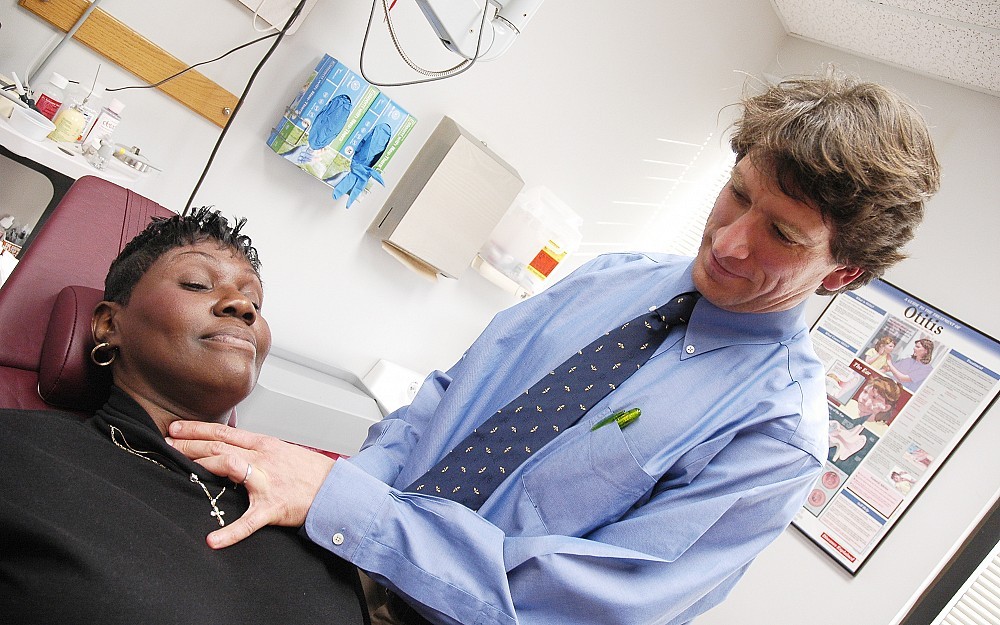
In checking the thyroid for cancer, Steward says, the first step is palpationsimply feeling the lower neck under the Adams apple to see if there are any nodules in the thyroid. If an abnormality is felt, an ultrasound can be performed that is more sensitive and specific in searching for cancer.
A generation ago, we relied almost exclusively on palpation so a cancer had to be pretty big to be discovered, says Steward. Now, with ultrasound, we can find cancers one centimeter or smaller.
Patients who have nodules that are large or suspicious on ultrasound should have an ultrasound-guided fine needle biopsy to exclude malignancy, says Steward, who adds that 90 to 95 percent of nodules are benign.
Related Stories
UC radiation oncologist speaks with Local 12 news about clinical trial for head and neck cancer treatment
August 10, 2026

Dr. Sara Medek, a UC radiation oncology professor, speaks with Local 12 news about a new clinical trial aimed at reducing radiation in certain areas while still treating cancer effectively but with fewer painful side effects.
Cancer Center director charts future based on collaboration, AI
August 10, 2026

David Gius, MD, PhD, was featured in a Cincinnati Business Courier article and The Cancer Letter’s “The Directors" podcast discussing his priorities and goals as he recently took the helm as director of the University of Cincinnati Cancer Center.
UC graduates cross finish line at commencement
August 7, 2026
The University of Cincinnati recognized 2,125 graduates in two ceremonies at summer commencement Friday on campus at Fifth Third Arena.