Piano alumna Brianna Matzke premieres TREMOR project at American Sign Museum
The performance project focuses on the intersection between art and disability

Story by CCM Graduate Assistant Lucy Evans
When pianist Brianna Matzke (MM Piano Performance ‘11, DMA Piano Performance ’14) was diagnosed with an essential tremor in her hands in 2020, she kept the diagnosis private.
“I was afraid for my professional career,” she says. “Not because I was worried about the shaking—I was already dealing with the shaking for many years at that point… what I was worried about was the stigma.”
A progressive neurological disorder, essential tremor affects an estimated 10 million people in the United States. For a professional pianist, the diagnosis brought with it concerns over how she would be perceived as a performer and artist.

Brianna Matzke. Photo/Provided.
“I didn’t want people whispering behind my back saying, ‘Oh, she probably played poorly on that performance because she has an essential tremor,’” Matzke explains. Though, she notes, she doesn’t believe her tremor has affected her own artistry. “I’ve never known anything else,” she says. “Everybody misses notes when they perform… I could not tell you when I missed notes, if I missed it because I’m just a human or if I missed it from the tremor.”
TREMOR is a performance art project created in response to Matzke's diagnosis. It features a world premiere piano concert and panel discussion at 6 p.m. on May 5, 2024 at the American Sign Museum. The project also includes an art opening, with musical responses from local new-music ensemble concert:nova on April 28 at The Well.
It’s my way of taking control of the narrative, claiming [my essential tremor] as part of my identity while also saying that it is not a flaw in my artistry, but in fact, at the heart of it."
Brianna Matzke
In addition to her career as a pianist, Matzke is the founder and artistic director of The Response Project, a commissioning initiative “that asks composers and artists to create new music (usually for the piano) and new works (of many disciplines) in response to a preexisting work or idea.” Since 2015, the Response Project has performed new works responding to Karl Stockhausen’s Mikrophonie, Bob Dylan’s 1965 album Highway 61 Revisited, the phrase “On Behalf,” the deep listening meditations of Pauline Oliveros, and more.
The Response Project's newest installment, TREMOR, is presented in partnership with concert:nova; Visionaries + Voices, an organization supporting Cincinnati artists with disabilities; and the International Essential Tremor Foundation. The program explores “perceptions of ability/disability, personal expression in the face of misunderstanding, and belonging in a world ill-equipped to welcome.”
“It’s my way of taking control of the narrative, claiming [my essential tremor] as part of my identity while also saying that it is not a flaw in my artistry, but in fact, at the heart of it,” says Matzke.
Matzke selected each of the eleven composers and artists who are featured in TREMOR. “I wanted to have a wide range of artistic and personal standpoints represented in the responses,” she says. “Many of the artists identify as having a disability, but not all of them. Some of the artists have just done work that explores themes of authenticity, or being misunderstood.”

Cincinnati's American Sign Museum. Photo/ Alias Imaging.
The concert at the American Sign Museum features original compositions by Molly Joyce, Hanna Benn, Matthew Evan Taylor, Adeliia Faizullina and Forrest Pierce. The event at The Well featured musical responses to visual artwork by Britni Bicknaver, as well as five artists from Visionaries + Voices: Nick Kraft, Rosalind Bush, Milo Gleich, Vince Cole and Linda Kunick.
Beyond the two events in Cincinnati, Matzke plans to take TREMOR on the road while on sabbatical from her position at Wilmington College in Wilmington, Ohio. She hopes the program will lead to a greater understanding of how people of all abilities and identities exist in the world.
“I really believe that if people learn to be curious and listen to music and look at art with open ears and open eyes, that it can help them practice opening their hearts as well,” she says.
“On a more specific level, I really hope that audiences understand that virtuosity at your art form does not necessarily lead to an interesting performance,” she explains. “I am so much more interested in authenticity through our human nature — which is a flawed nature that provokes beautiful art and beautiful music.”
Visit The Response Project website to learn more about TREMOR and the artists involved. Reserve tickets for the event at the American Sign Museum.
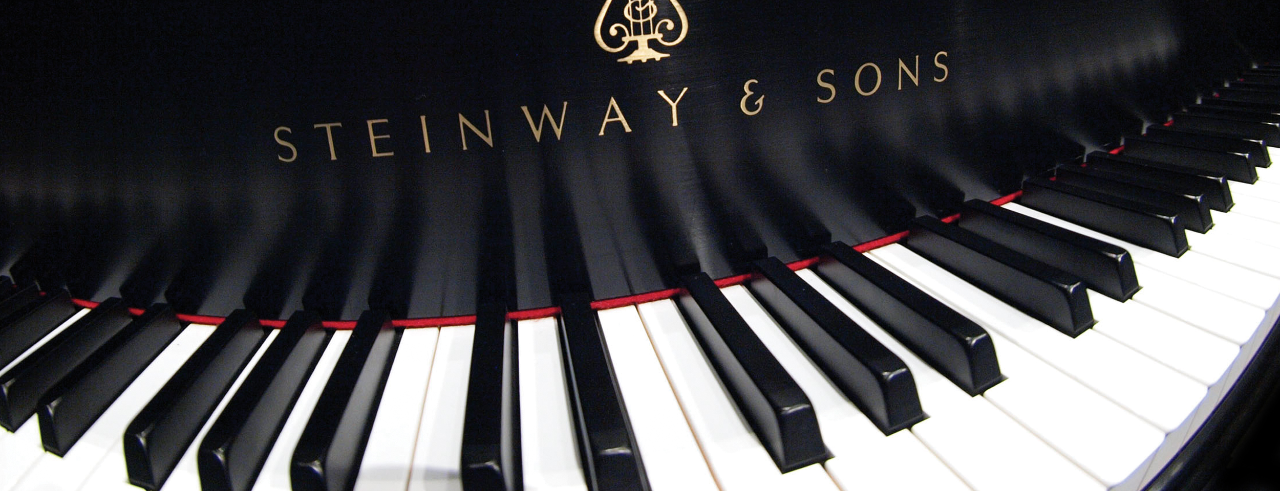
Featured image at the top: The keys of a piano.

Lucy Evans
CCM Graduate Assistant, Marketing + Communications
Lucy Evans is an artist diploma student studying Opera-Vocal Performance at CCM. She is a graduate of Northwestern University’s Bienen School of Music, and was recently an Apprentice Artist with the Santa Fe Opera. test test test
Additional Contacts
Curt Whitacre | Director of Marketing/Communications | UC College-Conservatory of Music
whitaccp@ucmail.uc.edu | 513-556-2683
Related Stories
Get to know CCM’s newest faculty and staff members
September 2, 2026
UC’s College-Conservatory of Music will welcome a variety of new faculty and staff members to its roster of distinguished performing and media arts experts, researchers and educators this fall.
How two UC co-ops joined Procter & Gamble for fast-track innovation
September 2, 2026
University of Cincinnati cooperative learning students observed a real-world creative workshop with Procter & Gamble on an early-stage product.
Cancer Center plays key role in lab research, clinical trials for new pancreatic cancer drug
September 1, 2026

WLWT and WCPO highlighted the contributions of University of Cincinnati Cancer Center researchers that helped lead to the recent FDA approval of daraxonrasib, a new treatment for pancreatic cancer.