‘Food as Medicine’ event cultivates local food-insecurity fixes
From farm to fork, bringing healthy food to everyone’s tables

Urban Farming Initiative, led by CEO Kevin Mackey and executive director Ben Booker, recently hosted an impactful “Food as Medicine” event at the University of Cincinnati’s 1819 Innovation Hub.
From farm to fork, this milestone event showcased urban agriculture's power to address food insecurities, foster sustainability and promote community health in Cincinnati and beyond.
As an 1819 startup partner, the Urban Farming Initiative aspires to provide fresh produce while gathering and analyzing food needs and production data. The goal is to align production with community demand and create a model for future urban agriculture initiatives.
"Our work is not just about growing food in neighborhood gardens and farms — it's about growing healthier communities," Mackey says. “We believe every neighborhood has the components of a circular food system; they’re just not connected. This initiative demonstrates how sustainable urban agriculture can invigorate our communities around healthy food habits, which in turn is proven to contribute to desirable economic and social outcomes.”
Growing healthier communities
Conceived in 2020, the Urban Farming Initiative transforms vacant warehouse and office spaces into productive food hubs and urban farms. By integrating container farming technology with community garden efforts, the initiative enables year-round production of locally sourced, nutritious food, emulating the output of rural farms on smaller, urban plots.

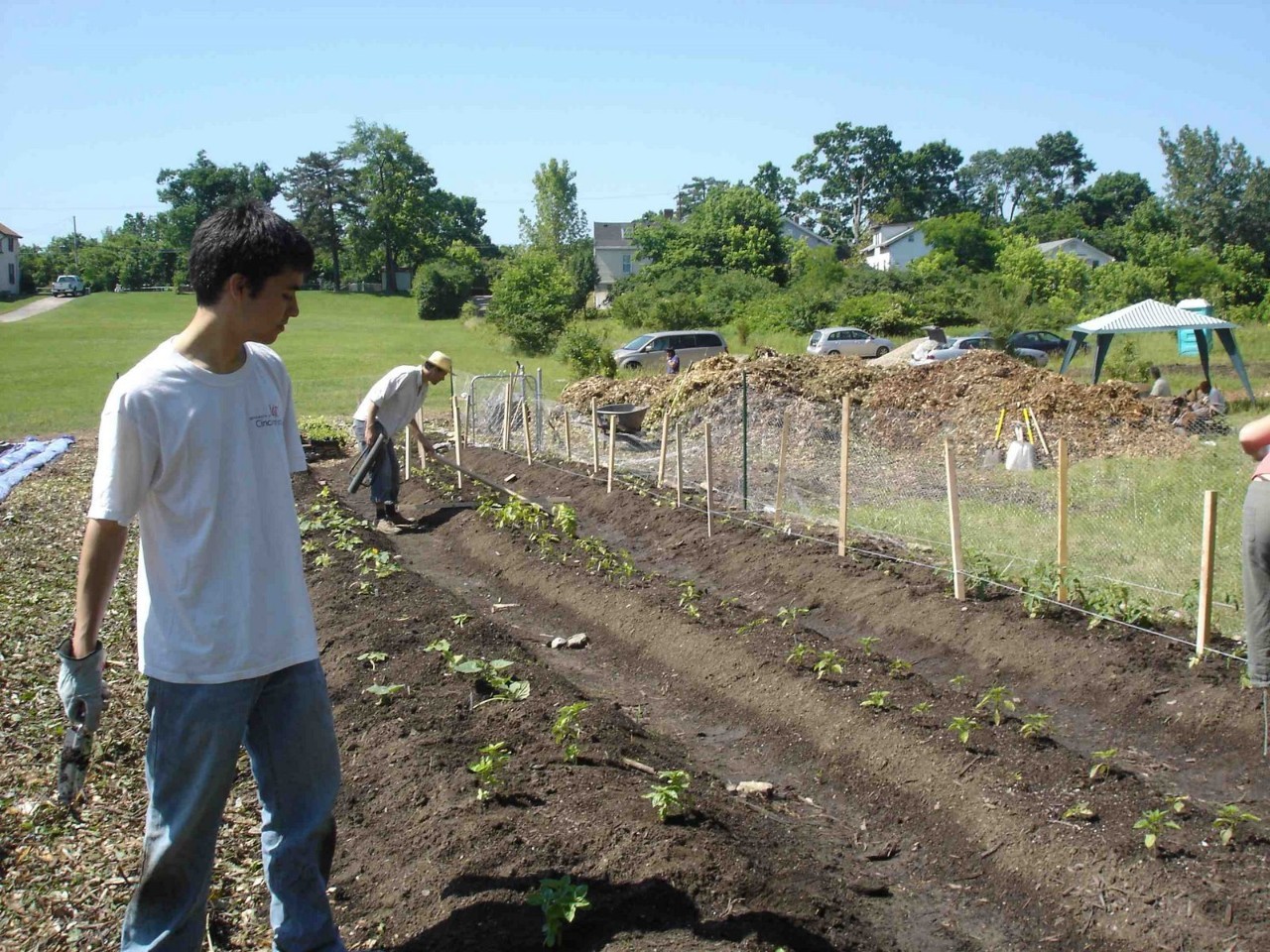
View of an urban farm in Walnut Hills. Photo/Urban Farming Initiative
The mini-conference highlighted the "Food as Medicine" concept, emphasizing the connection between locally grown, nutritious food and improved health outcomes.
The keynote speaker was Dylan Steen, a UC cardiologist and director of clinical trials and population health research. Steen shared his groundbreaking research study “Supermarket and Web-Based Intervention Targeting Nutrition for Cardiovascular Risk Reduction (SuperWIN),” which he conducted in partnership with Kroger.
The SuperWIN trial harnessed its relationship with the nation’s second-largest grocer to test whether personalized dietary recommendations could be provided to customers based on their weekly shopping habits. Since most shoppers frequent the same grocery store 2.3 times per week, Steen discovered that providing “mini-boosters” of dietary advice based on their buys could nudge people toward healthier food choices without regular visits to a dietitian.
Producing innovation
The Urban Farming Initiative’s innovative model integrates indoor container farming for crops like leafy greens with outdoor seasonal garden beds, ensuring continuous supply and minimal food waste. Partner organizations, including 80 Acres Farms and Findlay Market, amplify its impact.
Our approach connects neighborhoods and community members to fresh, pesticide-free produce while supporting local businesses and environmental resilience.
Ben Booker Executive director, Urban Farming Initiative
"Our approach connects neighborhoods and community members to fresh, pesticide-free produce while supporting local businesses and environmental resilience," Booker notes. Food as Medicine ties into Urban Farming Initiative’s mission since it drives demand for produce in communities that otherwise wouldn’t seek out nutritious choices – making local, environmentally sustainable food products commercially viable.
During the conference, Urban Farming Initiative introduced its new app. The app connects Walnut Hills residents to locally sourced food options, encouraging intentional eating habits throughout 2025. Attendees also explored how urban farming addresses food security challenges, promotes sustainability and enhances public health.
Community members flock to 1819
The “Food as Medicine” event highlighted the role of fresh, local produce in health and wellness from the heart of the Cincinnati Innovation District. It involved local food vendors, expert organizations and community members including La Soupe, Kroger Health, the SAFE Network, Freestore Foodbank, the Ohio Farmers Market Network and Findlay Market, among others.
The event also featured culinary demonstrations, networking opportunities with local vendors and a panel discussion with the following thought leaders:
- Anna Albi: Cincinnati City Council member and advocate for food as medicine programs
- Florence Rothenberg: Cardiologist and founder of Heart of Northside
- Frank Sawyer: Senior vice president of operations at Trinity Health Oakland Hospital in Michigan
- Katelyn Smoger: Director of Food is Medicine at Trinity Health Oakland Hospital
- Katie Jesurun: Chef at Goosefoot Cook and Grow
- Laura Brown: Director of nutrition at Kroger Health
- Meghan Henshaw: Founder of Ocotillo Herbals and Food as Medicine educator
- Radha Lakshmi: Cincinnati-based chef and artist
Panelists explained the top barriers to healthy eating habits and spoke of ways to break these barriers down. Cost, access and a lack of knowledge were identified as the prime factors leading individuals to treat food as a necessary evil rather than as the path to a healthier lifestyle.
There’s a lot happening in Cincinnati to solve these issues and lift Food as Medicine, from community gardens in Northside and Walnut Hills to UC and Kroger’s pioneering SuperWIN diet research. With leaders at the municipal, corporate and grassroots levels working to introduce healthier habits to Queen City residents, there’s hope that Food as Medicine will become less a concept and more a reality.
Featured image at top: View of an urban farm. Photo/Unsplash
Next Lives Here
The University of Cincinnati is leading public urban universities into a new era of innovation. Our faculty, staff and students are saving lives, changing outcomes and bending the future in our city's direction. Next Lives Here.
Additional Contacts
Related Stories
Brian Lewis
BEARCATS FOR LIFE
For me, being a Bearcat for Life means staying connected to the university that helped shape my future and investing in the students who will shape its future for years to come.
Decade of discovery
July 27, 2026
Every summer, UHP Discover has connected undergraduate students in the University Honors Program (UHP) to a unique array of opportunities in original interdisciplinary research. This year, the program celebrates its 10th anniversary.
UC experts say proper produce washing is key defense against Cyclospora
July 24, 2026

Hamilton County Public Health reports confirmed cases of cyclosporiasis, as concerns persist. Cyclospora is a parasite that can cause a stomach illness lasting days — sometimes even weeks. University of Cincinnati medical experts say it is usually linked to contaminated water or food, often fresh produce.