Action News 5: PEP Buddy helps people breathe easier
UC Venture Lab-backed startup aims to help people affected by COPD

A hands-free device developed by researchers at the University of Cincinnati could help the 12.5 million Americans who have chronic obstructive pulmonary disease breathe easier, Action News 5 in Memphis, Tennessee, reported.
PEP Buddy, a UC Venture Lab-backed startup, was created by Muhammad Ahsan Zafar, MD, and Ralph J. Panos, MD.
With COPD, it takes longer for people to get inhaled air out of their lungs. With each breath, extra air is retained in the lungs. This “air stacking” during activities (dynamic hyperinflation) is the primary reason for breathlessness in people with COPD and also leads to decreased oxygen levels.
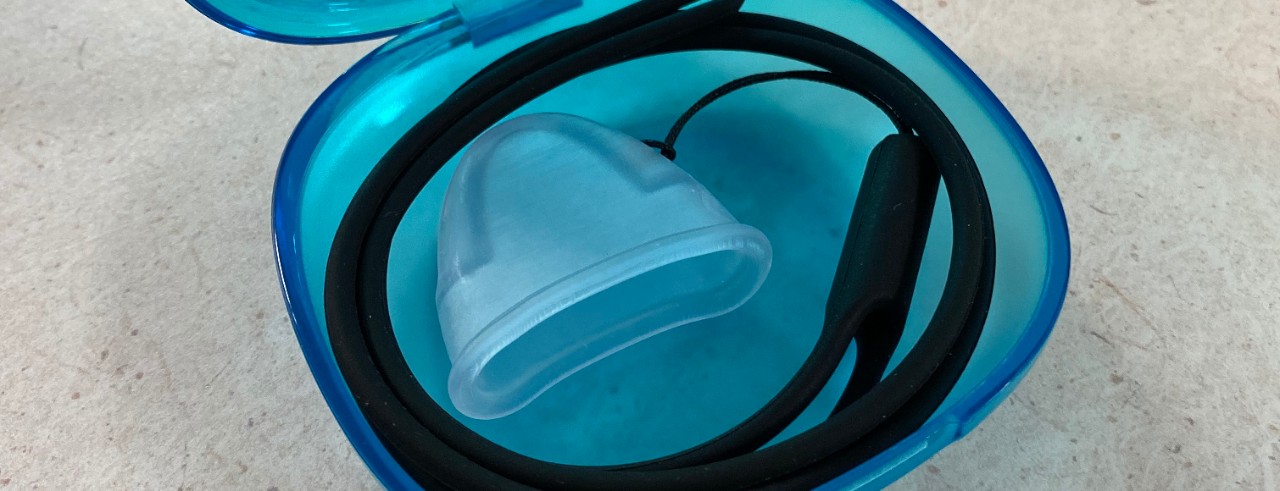
PEP Buddy gives a gentle back pressure while the user breathes out, which assists in keeping open air tubes in the lungs and preventing them from collapsing. The device also prolongs the exhalation phase and reduces the breathing rate, decreasing the effects of air stacking.
“It’s just simply placed in the mouth, one breath in through the nose, and then out through the device. That resistance to airflow creates the back pressure, which relieves the air trapping and dynamic hyperinflation,” Panos said.
Featured image at top: PEP Buddy device. Photo/PEP Buddy
Innovation Lives Here
The University of Cincinnati is leading public urban universities into a new era of innovation and impact. Our faculty, staff and students are saving lives, changing outcomes and bending the future in our city's direction. Next Lives Here.
Related Stories
These teeny spiders are social media stars
August 28, 2026

The New York Times turned to a University of Cincinnati professor to explain the appeal of jumping spiders on social media.
An internal divide among unions on AI impacts the Wisconsin gubernatorial race
August 28, 2026

Anne Lofaso, a professor in the Donald P. Klekamp College of Law at UC, spoke with Wisconsin Public Radio, about the schism among unions over AI and whether it is a plus, a negative, or somewhere in between when looking at job creation.
On-site training in Speech & Hearing Clinic sets UC’s programs apart
August 27, 2026
At the University of Cincinnati’s Speech & Hearing Clinic, Doctor of Audiology and Speech-Language Pathology graduate students gain real-world experience while providing free speech and hearing services to the community.